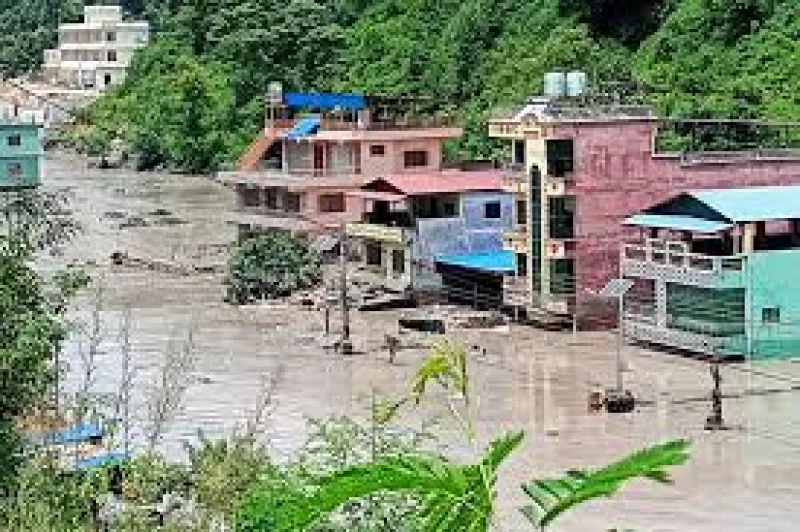
Floods and a mudslide tore through the Nepal-China border area on Tuesday, killing at least nine people and sweeping away roads, bridges, homes and power projects in a mountain corridor already cut off by rising water. Rescue helicopters could not land in the worst-hit parts of Rasuwa, while officials warned that the toll could still rise.
The damage was spread across both sides of the border. Nepal’s energy ministry said 430MW of electricity supplies were affected, mostly from hydroelectric projects, a hit that amounts to more than 12% of the country’s total hydropower capacity of 3.2GW. In Tibet, the mudslide hit the Gyirong port and cut roads, communications and power links in the Shigatse region near the border with Nepal.

The urgency is not just the number of dead. District administrator Narendra Pariyar urged people living along the Bhote Koshi River to move to higher ground, saying there could be heavy casualties or loss of property. Balendra Shah said police and military were joining the rescue effort and that people in lower areas had been told to get to safer places. On the riverbank, Tula Bahadur BK described a place where “there is devastation everywhere we look,” and said the settlements next to the river had been completely swept away.
BK said five of his own relatives were missing, a detail that gives the disaster its sharpest human edge. Rescue efforts were being slowed by the water itself: helicopters could not land in Syapru Besi and Timure in Rasuwa because the river was running above its normal course and the affected ground was too exposed and unstable for easy access. Officials in Tibet were also fearing major casualties after the mudslide hit a land crossing between the neighbours.
The open question is what set off this flood. That matters because last year a deadly flood on the same river was traced to the draining of a glacier lake in Tibet, an event that killed nine people, left 24 missing and washed away a friendship bridge linking Nepal and China for months. This time, the cause was not immediately clear, which means the search is not only for people but for the trigger that could threaten the same border settlements again.