Netflix’s new film La Captura turns back to 8 de enero de 2016, when the military launched Operación Cisne Negro in Los Mochis at about 4:30 in the morning to carry out the third and final capture attempt of Joaquín Guzmán Loera. The raid ended with five members of the criminal cell dead, but Guzmán escaped again before being stopped later by two Federal Police officers.
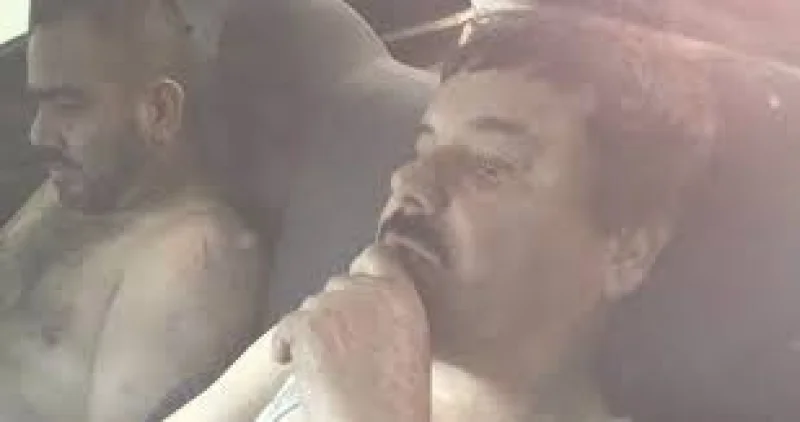
The story matters now because the film is putting a real operation back in the spotlight, and the center of that story is not just Joaquín ‘El Chapo’ Guzmán but Jorge Iván ‘El Cholo’ Gastélum Ávila, the man at his side. A photograph from that day shows Gastélum on the patrol car of the officers who detained Guzmán, wearing a muddy sleeveless shirt with his head down, a rare image of a figure who usually moved in the shadows.
Before the guns were drawn, Elements of the Secretaría de la Marina had spent almost a month analyzing a house in a middle upper-class neighborhood in Los Mochis. That house became the target of a raid built around intelligence, timing and force. It was meant to close the chapter on Guzmán’s last major flight, after earlier escapes had already turned the hunt into a national obsession.

Gastélum was not a minor figure in that chase. Born in Badiraguato, Sinaloa, he started in the organization as a pistolero and, after a 2006 arrest that sent him to the penal de Aguaruto in Culiacán, he later escaped in 2009 dressed as a woman. After that escape, he allegedly became Guzmán’s chief of security. ICE said that by August 2009 he was already a high-ranking member of the Cártel de Sinaloa, the alleged jefe de plaza of Guamúchil, Sinaloa, supervising at least 200 armed men and narcotics activity in the area and its surroundings.
That rise helps explain why his name keeps surfacing whenever the operation is discussed. Miguel Ángel Vega described Gastélum as cold, violent and an excellent strategist, but also as intelligent, determined and unafraid, someone who went to the front when there was a confrontation. Vega said the men under his command moved through the sierra like an army and that Gastélum was very good at coordinating them. For a figure with so few photographs, the image of him on that patrol car has become one of the few fixed points in a life built on movement.
The friction in the story is simple: the operation was designed to end with Guzmán in custody, and it did not. Even after the tunnels, the stolen cars and the detention by two Federal Police officers, the man the military had come for slipped away once more. La Captura is dramatising the moment when the net finally tightened, but the unresolved question behind the film is the one that has followed Gastélum for years: how a prison escapee from Aguaruto ended up as the security chief beside El Chapo when the last chase reached its end.
For now, the facts stop at that morning in Los Mochis. The film may give the story a new audience, but the real ending is still the same: a failed sweep, five dead, one escaped target, and Gastélum frozen in a muddy shirt on the hood of a patrol car, staring down at the road that had just run out.