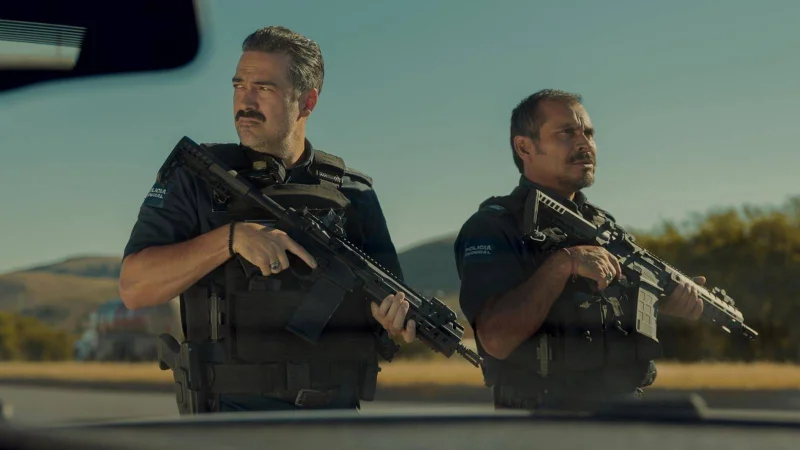
On January 8, 2016, Arturo Carmona and Héctor Rosales are on what should have been a normal patrol shift when a routine stolen-car check pulls them into the capture of Joaquín "El Chapo" Guzmán. In Netflix action thriller facing El Chapo, that moment becomes the film’s engine: two federal police officers suddenly responsible for moving one of the most feared men in Mexico to safety.
The search around La captura is easy to understand. It is a compact, 90-minute thriller built around a famous arrest, and it tells the story from the point of view of the officers who helped make it happen. Director Chava Cartas keeps the focus on Carmona and Rosales, played by Alfonso Herrera and Noé Hernández, rather than on Guzmán himself, which gives the film a different kind of pressure. The violence is often held at the edge of the frame, but the danger never leaves. Every stop, every vehicle, every face on the road can turn into a threat.

That threat matters because Guzmán has just escaped a special forces operation with one of his henchmen before falling into the hands of the two officers. From there, Carmona and Rosales have to escort him through territory where cartel power matters more than institutions, while Guzmán keeps trying to buy their complicity. The route is not just a transfer; it is a test of whether the officers can keep their nerve long enough to reach the station without giving the cartel another chance to interfere.
Arturo Carmona’s own fear gives the story its sharpest edge. He is about to become a father again, and he worries about what might happen to his wife and children if the wrong person decides to punish him for doing his job. That private anxiety runs alongside the public one, and it keeps the film from turning the capture into a clean victory. The men are not simply escorting a prisoner; they are carrying a family’s future with them while trying not to be trapped by corruption, intimidation or fear.
The closing credits do not try to soften that reality. They use canonical explanatory texts about the fate of the real protagonists, which leaves the film with a harder ending than a standard crime thriller would have. La captura is strongest because it treats the arrest not as the end of the story but as the beginning of the risk that followed it. What the film does not fully answer is what became of Carmona and Rosales after that day, and that silence hangs over the final credits more forcefully than any gunfire could.