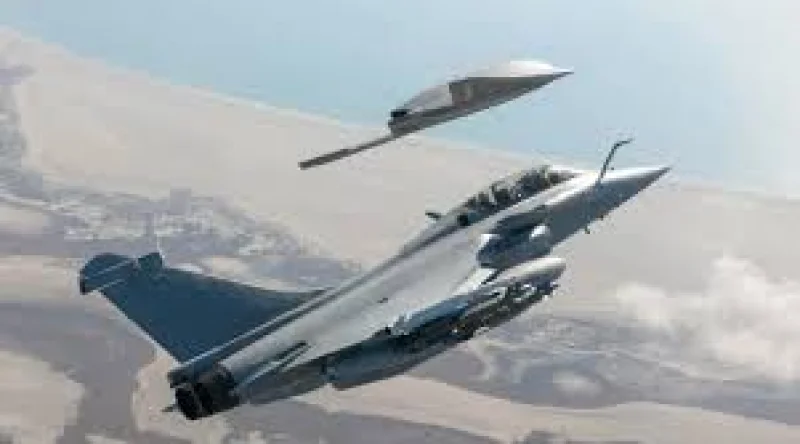
India has opened talks with France on joining its Future Combat Air System, a sixth-generation fighter program that could pull New Delhi into one of the most ambitious military aerospace efforts now still standing. The move comes as India tries to narrow a widening gap in advanced fighter technology and strengthen an air force fleet that still leans on French Dassault Rafale jets.
India's Defense Ministry told parliament this month that it had initiated efforts in a concerted manner to co-join the effort. Earlier this year, it had said India would try to join one of the two consortia working on a new generation fighter aircraft, one led by France, Germany and Spain and the other by the UK, Italy and Japan. That opening has become more fluid since June, when France and Germany abandoned their joint effort to develop the combat fighter at the center of the program.
The search for a seat at the table is driven by timing as much as ambition. India is trying to beef up its air force while it remains behind in key fighter technologies, especially engine development. Its most advanced jets are still 4.5-generation French Rafales, and it is also pursuing a domestic multirole fifth-generation fighter whose prototype flight is targeted for later this decade. Sixth-generation aircraft are expected to go beyond fifth-generation stealth and advanced radar capabilities, with the future jets built around a core fighter supported by drones and a combat cloud.

That is why the question of what France would actually put on the table matters so much. Analysts say talks are likely to center on industrial participation, design and development, and access to intellectual property, but India wants industrial workshare and the deeper technology transfer that would make the partnership useful at home. The harder issue is engine and radar technology, which analysts say would have to come from French companies if the talks are to produce anything beyond a political handshake.
Anil Chopra said India should not wait for the next leap to arrive from elsewhere. He argued that India still has to transition to fifth-generation technologies and should make a parallel start on a sixth-generation program to bridge the serious gap it faces. He added that some of the sixth-generation technologies it might acquire could also help as India develops its fifth-generation program.
The pressure behind that argument is growing. Harsh Pant said India has long tended to lag one or two cycles behind other powers, but that room has narrowed because air power is evolving quickly and China is advancing just as fast. A parliamentary committee added to the sense of urgency on Aug. 9, recommending that the Defense Ministry step forward the planning process for the development and acquisition of sixth-generation aircraft. What France is prepared to share, and how much of the work India would receive in return, is now the question that will decide whether these talks become a real program or just another search for a faster answer.