OpenAI opened the core of Codex to the public on August 20, fully open-sourcing Harness under the Apache-2.0 license and giving developers a framework they can modify and commercialize. The release turns what had been an internal execution layer into code teams can embed inside their own software.
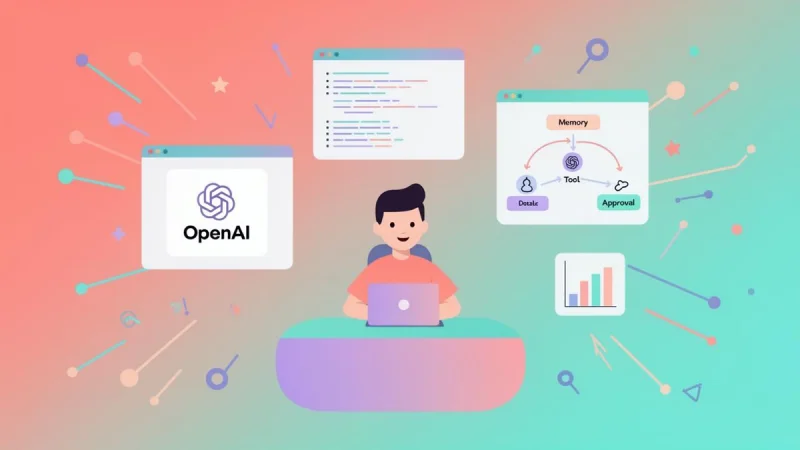
That matters now because Harness is not a model. It is the system that helps Codex understand tasks, hold long conversations in memory, review relevant information, invoke tools, show progress, handle exceptions, ask for human approval at critical points and return structured results. OpenAI said it makes more sense to bring that agent behavior into software built around real work than to force every team to move existing workflows into a generic code assistant.
Greg Brockman put the point plainly, saying Codex can drive far more than coding tools. OpenAI also published three core components in the openai/codex repository, including an app-server that lets applications keep persistent conversation state, stream events, interrupt AI work mid-stream, expose proprietary tools and manage human-in-the-loop approval requests. For developers, that means the same underlying loop can be folded into engineering systems, operations dashboards and financial software instead of being treated as a stand-alone product.

The company paired the release with examples meant to show that broader use. Thrive Holdings and Crete embedded Harness into professional tax preparation workflows, and a pilot program processed 7,000 returns while cutting preparation time by roughly one-third and incorporating real-time feedback from tax professionals. Cisco used the Codex SDK to build an App Builder inside its cloud control platform, another sign that the framework is being positioned for work beyond code generation.
The benchmark story, though, is less tidy. OpenAI said two adjustments to Harness on ARC-AGI-3, retaining reasoning and context compression, lifted GPT-5.6 Sol from 13.3% to 38.3%, and the company said those changes cut output token use to one-sixth of the original. But the ARC Prize official standardized testing framework gave GPT-5.6 Sol only 7.8%, a gap that François Chollet said should be understood in light of settings that use general features available to all API users and therefore fall within a reasonable scope.
That contrast matters because it shows how much of the claimed gain comes from how the system is run, not just what the model can do on its own. OpenAI is making a bet that developers want the agent loop itself, not only the model behind it, and Harness is now available as code they can inspect, change and ship. What remains unanswered is how quickly those same agent workflows move from demonstration into products that ordinary users will actually see.