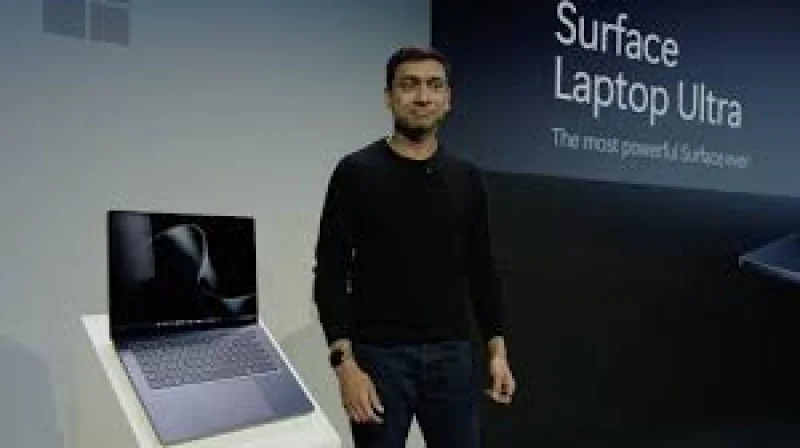
Microsoft on Wednesday unveiled its Nvidia-powered Surface Laptop Ultra, a $2,599 machine designed to let people run AI models at home instead of through the cloud. The new laptop is built around Nvidia's Arm-based RTX Spark and its 128GB of onboard memory, a setup aimed at making local AI practical on a personal computer.
The launch lands as more users search for ways to use Copilot AI and other tools without handing over data to cloud services. Most people still reach for ChatGPT, Claude, Gemini or Muse online, but Microsoft and Nvidia are now pitching a different path: models that stay on the device, answer locally and do not depend on a subscription-style connection every time they are used.
That shift matters because local AI changes what a computer can do. Running models at home can remove usage limits and let users choose from open-weight systems from Google, Meta, Nvidia, Moonshot AI and Alibaba Cloud, with some room to tune them. It also keeps data on the user's machine rather than sending it back to the cloud, which is a clear draw for people worried about privacy.
The catch is that the same freedom makes the setup harder. Running local AI models and agents is more complicated than logging into ChatGPT or Claude, and it demands far more computing power than cloud services do. More advanced users have already been testing local AI with agents such as OpenClaw, which can organize email, launch and operate apps and even make purchases on a user's behalf, but that kind of work has pushed people toward low-cost computers before, including Apple's Mac mini.
Cloud-based agents have not stood still. Meta's Muse and OpenAI's Dots offer similar capabilities online, but getting the most out of them can mean linking accounts such as Gmail and Uber. That trade-off helps explain why local AI keeps attracting attention: it offers more control, but also asks the user to do more work and buy more machine than the average consumer needs.
Microsoft's new laptop appears well suited to that niche. The company says the Surface Laptop Ultra can likely handle local AI tasks with ease, and its 128GB of memory gives it room for demanding models. But the price puts it well above the reach of many buyers, which leaves the broader market where it already is: using mainstream cloud AI services for convenience, speed and a lower barrier to entry.
One sign of how hard Microsoft is trying to widen that market is the price of a Google AI subscription, which includes access to Gemini 3.1 Pro, Deep Research in Gemini and 400GB of cloud storage for $4.99 per month. Against that, the Surface Laptop Ultra looks less like a mass-market laptop than a statement about where Microsoft and Nvidia think AI computing could go next.