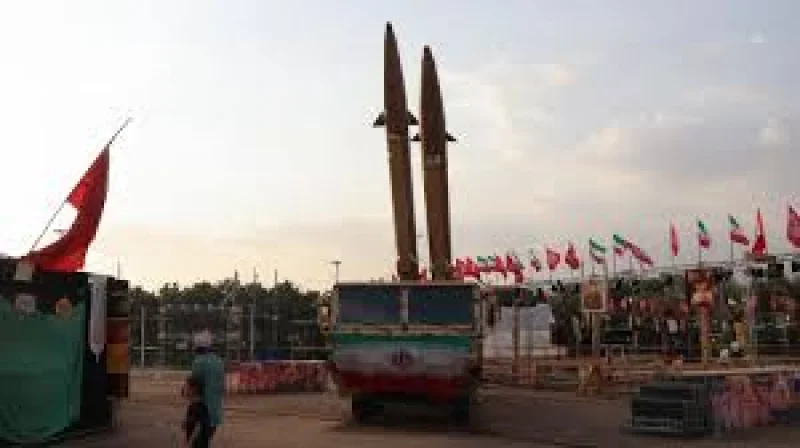
Iran has considered striking military targets in Europe if Donald Trump escalates the war, according to a report on Wednesday that points to a widening shadow conflict far beyond the current front. The reported planning included US assets in southeastern Europe, with Bulgaria among the places named.
The timing matters because the same standoff is still moving in parallel tracks. Trump said on Tuesday there were no talks or conversations going on, or scheduled, with Iran, while the 60-day period set by the June US-Iran memorandum has already run out without a final agreement. That leaves no diplomatic landing zone at the same moment Iran is being described as weighing retaliation options.
Two insiders told the Financial Times that Iranian forces had assessed possible strikes against US assets in southeastern Europe and had separately looked at attacks on subsea fiber-optic cables in the Strait of Hormuz if the conflict intensified. Bulgaria, which approved the use of Bezmer Air Base by US refueling aircraft last month, was singled out in that assessment, and Cyprus was also identified as a potential target after a British air base there was hit by a drone in March.

The reported logic is straightforward: Tehran appears to be broadening the menu of possible responses if Washington moves against Iranian infrastructure. One source said Iran was preparing to expand the war if Trump acted on those threats, while another said there would be no limits on the response to US military action. Military analysts told the Financial Times that Iran could reach US assets in southern and southeastern Europe with medium-range ballistic missiles, though they questioned how accurate those missiles would be and how large Tehran’s longer-range stockpile really is.
The friction point is that the threats and the denials are running side by side. The sources said last month’s strike on a US base in Jordan, which killed three American service members, was Tehran’s most accurate long-range attack to date and a signal that it can hit farther afield. One insider put the message to Europe in plain terms: if Iran is hit hard enough, the war could move beyond the region and reach Europe. At the same time, the IRGC denied Trump’s claim that US officials were holding back-channel talks with Revolutionary Guard officials, and a White House official told Semafor that Trump’s Truth Social post amounted to calling off talks for the foreseeable future.
Iran has not publicly confirmed the reported plans, but the shape of its recent security appointments suggests the hardline view is gaining ground in Tehran. Jared Kushner said contacts with different parts of the Iranian government had been unusually robust and described the conversations as very positive and active, yet the public record today is still a warning light rather than a bridge. If Washington and Tehran stay locked out of direct talks, the next phase may be defined less by negotiation than by how far each side believes the other is willing to carry the war.