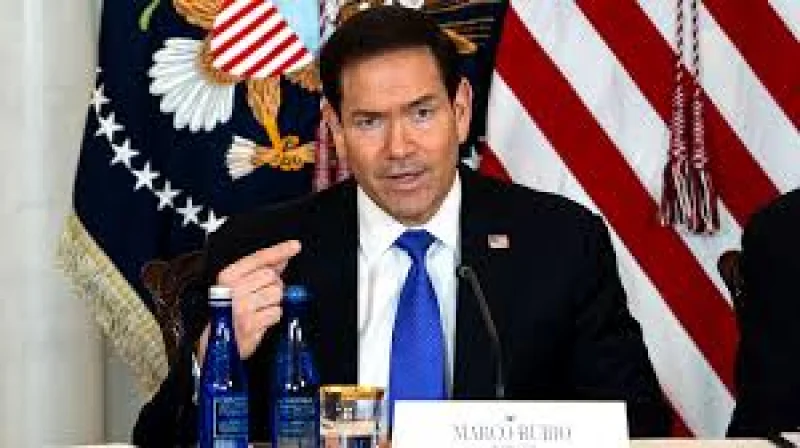
US Secretary of State Marco Rubio announced new sanctions this week against International Criminal Court President Tomoko Akane and ICC Senior Trial Lawyer Abdoulaye Seye, widening a pressure campaign that the Trump administration has been building for months. The latest move again puts the court’s top figures in Washington’s crosshairs and adds financial and travel restrictions to a dispute that has moved far beyond speeches and warnings.
Rubio said the two officials were being punished for engaging in the court’s efforts to prosecute officials whose government has not consented to ICC jurisdiction. The sanctions include asset freezes, travel bans and limits on services from US companies, making the penalties more than symbolic for anyone who depends on access to money, movement or business ties in the US orbit.
The step matters now because it follows a broader campaign that has already hit at least 11 ICC officials, including nine judges and the chief prosecutor. The Trump administration has used that campaign to escalate its fight with the court after ICC investigations into US personnel in Afghanistan and warrants for top Israeli officials, including Prime Minister Benjamin Netanyahu, over alleged war crimes in Gaza.

That clash is built into the arguments on both sides. Rubio has called the ICC a corrupt and fatally politicized supranational court that has abused its authority and gone beyond its mandate, while the ICC says it stands behind its staff and believes measures like these undermine the rule of law. Human Rights Watch’s Liz Evenson said the Trump administration seeks a get-out-of-jail-free card for whomever it chooses, a line that captures how the court’s critics see the sanctions as an attempt to shield favored governments from scrutiny.
The ICC was established in 2002 and has jurisdiction to prosecute genocide, crimes against humanity and war crimes in member states or when the UN Security Council refers a situation. Neither the US nor Israel are members, while the state of Palestine joined in 2015. That legal map explains why the court has remained a flashpoint for the Trump administration’s campaign to dismantle it and why Rubio last month called on the ICC’s 125 member countries to withdraw from the court.
What happens next is narrower than the rhetoric around it: the sanctions stay in force unless the US changes course, and Rubio’s demand for ICC member countries to walk away has not produced any public break with the court. For Akane and Seye, the immediate effect is personal as well as institutional — frozen assets, blocked travel and a message from Washington that the pressure is still rising.
For readers following the wider case against the ICC, the sanctions also land as the court continues to face scrutiny over its leadership, including a separate dispute involving Prosecutor Of The International Criminal Court Karim Khan.