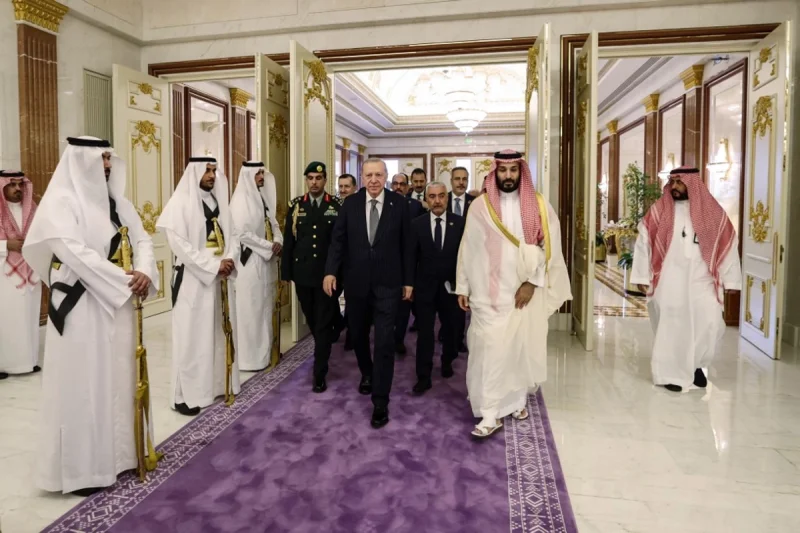
The Mecca Pact Defense Agreement is being described as a new Saudi-Pakistan-Turkey defense pact with mutual defense provisions, a sign that Saudi Arabia no longer trusts the old security order to hold. The agreement goes beyond the Saudi – Pakistan strategic defense agreement and pushes the region toward a wider shield built around shared risk.
It is being searched now because the move lands after a run of shocks that changed the calculation for MBS. He had assumed the US military backstop would keep Saudi Arabia secure, yet the Saudi – Iran deal brokered by China in March 2023 did not prevent the region from sliding into deeper danger. By February 2026, the US and Israel had attacked Iran in the midst of peace talks, and the US had also failed to stop Israel in its missile strikes against Hamas officials in Qatar.

That sequence matters because the Mecca Agreement is presented as the answer to a gap that opened between Saudi expectations and Saudi reality. The Saudi – Pakistan strategic defense agreement came just after the Israeli strikes in Qatar and before the latest Iran war, but the new Mecca Pact Defense Agreement is said to reach further, with NATO Article Five-like mutual defense provisions that would bind the signatories more tightly if one of them comes under attack.
The friction is obvious in the way the region is being read. Saudi Arabia once looked to US backing and regional de-escalation, including normalization with Iran, as the path to safety. Now the picture is one of former US allies rebuilding their own defenses after seeing Washington fail to stop the escalation around Iran and Qatar. That is why the pact is framed not as a routine military accord but as a reaction to a wider loss of confidence.
What remains unclear is the full text of the Mecca Agreement and exactly how far its mutual defense clause runs. The deal is described as looking to expand regional defense arrangements, but the open question is whether that ambition stays limited to Saudi Arabia, Pakistan and Turkey or becomes the start of a broader realignment that other Gulf states, including Egypt, may still choose to avoid.