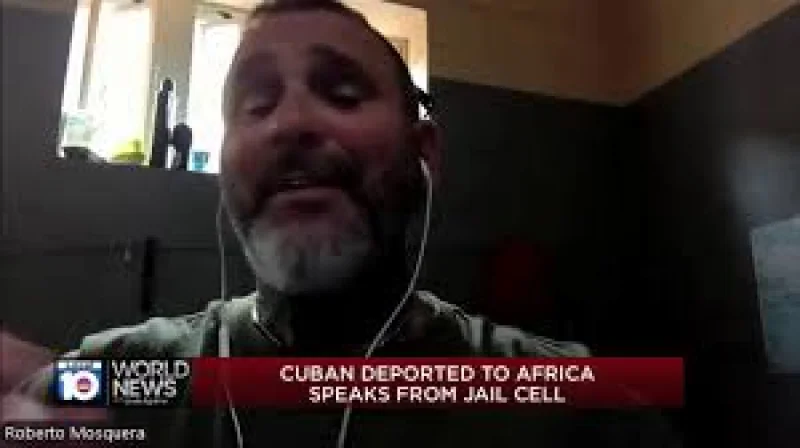
Roberto Mosquera has spent more than 14 months in Matsapha prison in Eswatini after the US deported him to southern Africa without his consent. The 59-year-old father of four daughters is still waiting for a clear answer on when, or whether, he will leave.
That waiting matters now because his case shows how the deportation flights work: migrants are taken from ICE custody, moved through Krome detention center or an airport in Texas, and then flown for more than 20 hours before they learn where they have landed. Mosquera did not know his destination until he stepped onto unfamiliar ground, a practice that has left men from Cuba, Honduras, Brazil and Colombia in legal limbo far from the countries they call home.

Mosquera’s path to Eswatini began at an immigration appointment, where ICE detained him before he was sent to Krome detention center and then to Texas for deportation. The Donald Trump administration later called him a “depraved monster” and expelled him even though he had already served his sentence. Born in Cuba, he has been unable to return there because Cuba has refused to take him back for nearly three decades.
Inside Matsapha prison, Mosquera has won a few small freedoms, but they have not changed his basic status. After a 30-day hunger strike and arguments with officers, he was allowed to wear his own clothes, move to an interior yard from his cell, make escorted trips to buy food at a nearby shop, and have a cellphone. He also bought a coffee maker with money sent by his family in Miami. Those changes make daily life a little easier, but they do not answer the question hanging over him.
He still has limited medical assistance, and he still does not know when he will be released. Jabulani Kunene, the prison officer who has dealt with his complaints, answered Mosquera’s repeated question — “How long are you going to keep me locked up here?” — with a blunt, “I don’t know, Roberto, I don’t know.” For now, Eswatini remains the place where a deportation ended and a long detention began, under an arrangement tied to the US deal-making with nearly 14 African countries and a system that sends migrants across the world before they can even say where they came from.