


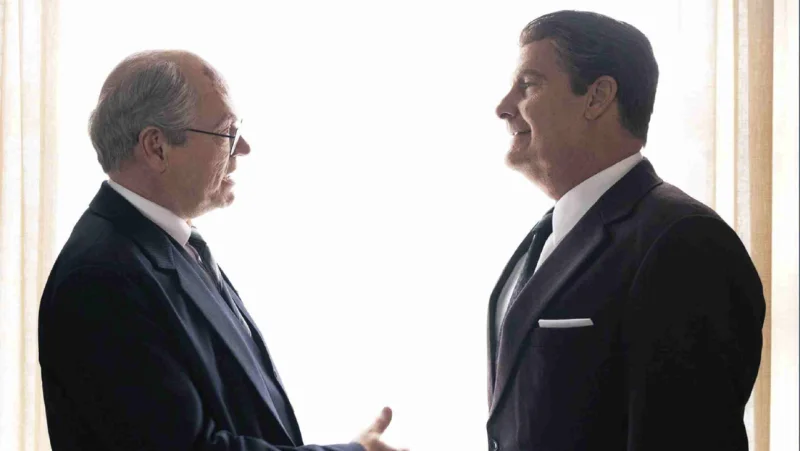
Michael Russell Gunn’s feature directing debut, The Brink of War, arrives with its eyes on one of the Cold War’s most consequential face-to-face meetings: Ronald Reagan and Mikhail Gorbachev in Reykjavik in 1986. The film turns that summit into a drama about the push for a nuclear reduction treaty, with the leaders talking through the kind of decisions that can move history without moving a finger.
That is why readers are looking at this film now. It is scheduled for release on Friday, August 14, and it comes with a cast built around the two men at the center of the story: Jeff Daniels as Reagan and Jared Harris as Gorbachev. The film also features J.K. Simmons, Hope Davis, Aya Cash, Branka Katic and Guy Burnet, while Gunn, who once served as a story editor for Aaron Sorkin’s HBO series The Newsroom, is making his first turn behind the camera on a feature.
The production leans hard into its historical setting. It was filmed at the actual location of the Reykjavik meetings, and the scenes between Reagan and Gorbachev were shot in the room where the talks took place. That choice gives the movie a built-in credibility that a soundstage cannot match, especially in a story so bound up in atmosphere, memory and the pressure of nuclear diplomacy.

Branka Katic’s Raisa adds another layer, giving the film room to show the summit as more than a contest between two presidents. The story includes scenes with Gorbachev and his wife, and that broader frame helps explain how much the meeting depended on people talking, listening and trying to keep a fragile opening alive. Gunn has said he wanted the film to be less about politics than about the importance of people with different ideologies speaking plainly to one another, a goal that fits the material neatly.
But the movie does not escape the limits of its own sermon. A drama built around dialogue can easily tip into speechifying, and that is where this one risks losing some of its force. It wants to bridge divides, yet it is also concerned with telling viewers exactly what to think, which can flatten the very tension that made Reykjavik matter in the first place.
Even so, the premise remains strong because the summit itself was not symbolic theater. It was part of the effort to advance a nuclear reduction treaty, and that makes every exchange in the room carry weight beyond the immediate moment. The question now is not whether The Brink of War understands that history, but whether it can dramatize it without turning conviction into instruction.
The Brink of War is rated PG and runs 1 hour 57 minutes, and it reaches audiences on Friday, August 14. By then, viewers will know whether Gunn has made a spare historical drama about leaders talking at the edge of something larger, or a film that leans too heavily on its own message to let the moment breathe.
