


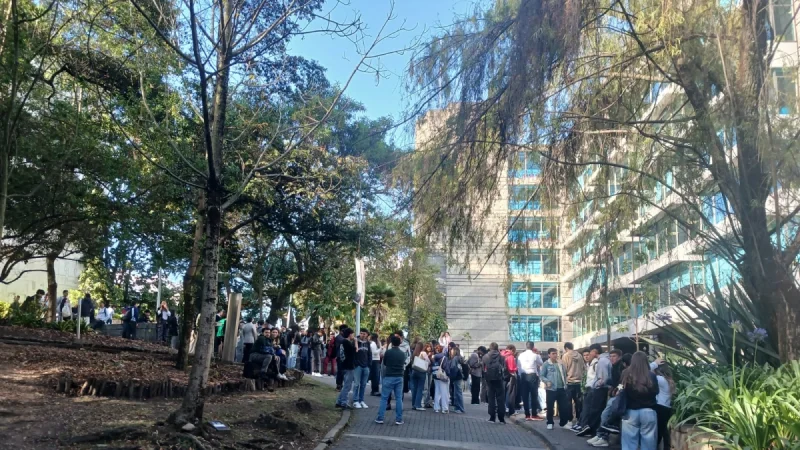
A magnitude 6.6 earthquake struck Colombia at 7:34 a.m. on Monday, August 10, with its epicenter in San José del Palmar, Chocó, and it was felt in Bogotá along with several other cities. In the capital, Carlos Galán said there was no report of damage or structural harm at the time, only some cracks in buildings.
The shake-up reached Valledupar, Envigado, Bucaramanga, Villavicencio, Cúcuta and Medellín, which is why attention moved quickly to what, if anything, had been left behind in Bogotá. The UNGRD said it was speaking with territorial authorities and entities of the Sistema Nacional de Gestión del Riesgo de Desastres to verify possible impacts.

Galán’s account is the detail that kept the morning from becoming a simple all-clear. There were no immediate reports of structural damage in Bogotá, he said, but the cracks he mentioned meant inspectors still had work to do. The Instituto Distrital de Gestión de Riesgos y Cambio Climático began verification across all localities in Bogotá, checking whether the cracks were superficial or something more serious.
The earthquake was recorded at a depth of 96 kilometers, which helps explain why it was widely felt without any immediate confirmation of major destruction. Colombia sits in a seismically active setting because of the contact between the Nazca, Sudamérica and Caribe plates, and the Servicio Geológico Colombiano says most seismic activity is concentrated in the Pacific zone. It also says Los Santos accounts for 60% of earthquakes in Colombia, while the Red Sismológica Nacional has monitored seismic activity in the country for 30 years and registered almost 300,000 seismic events in that time.
That is also why officials in Colombia keep returning to the same warning after every strong shake: earthquakes cannot be predicted in advance, only tracked once they happen. Julio Fierro put that plainly, saying the country is in a seismically active zone and that it is necessary to build memory and a culture around what it means to live there. For Bogotá, the next answer that matters is whether the cracks stay cosmetic or turn into something inspectors cannot dismiss.
