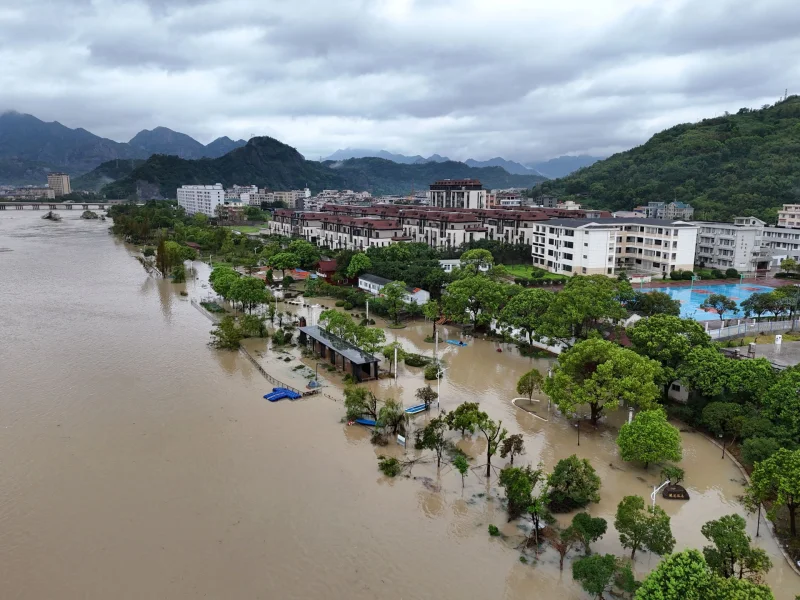
More than a million people were moved to safety across eastern China by Sunday evening as Typhoon Dolphin made landfall, with Shanghai alone shifting 215,600 people from areas it considered at risk. By Monday morning, the storm had already dumped record rain on the city and left transport systems scrambling to catch up.
A central Shanghai weather station recorded nearly 313mm of rain in the 24 hours to 7am on Monday, the city’s highest 24-hour total in more than 150 years of records. Another station in Shanghai recorded nearly 400mm. Public transport services, including many local trains, were suspended, and the city’s two airports canceled more than 1,300 flights.
The scale of the evacuations showed how quickly the storm had spread pressure across eastern China. Wenzhou relocated more than 900,000 people and opened more than 1,500 emergency shelters, while Fujian moved 98,900 people from high-risk areas. In all, more than a million people had been relocated by Sunday evening as the system pushed inland.

Dolphin weakened rapidly to a tropical storm by 5am on Monday, but that did not end the danger. Authorities kept an orange alert for heavy rain through Wednesday, warning that days of intense rain could still trigger flooding and landslides as the storm moved northward and farther inland. A separate weather picture from Zhejiang underscored how much water the system carried, with average rainfall across the province reaching 173mm from Friday evening to Monday morning.
The friction is that the storm is already losing wind strength even as the rain threat remains alive. Hangzhou resumed subway services on Monday morning after halting some train operations on Sunday, and Ningbo international airport planned to restart flights from midday Monday, but the bigger question now is how much more rain eastern and central China will absorb before the system finally breaks apart.
Typhoon Dolphin also disrupted travel beyond mainland China, with Taiwan suspending ferry services and canceling more than 180 flights on Sunday, Hong Kong reaching a highest-ever temperature of 36.9C, and Japan’s Okinawa prefecture reporting six injuries and power cuts to more than 50,000 buildings. In the Philippines, the storm did not make landfall in the north, but it intensified seasonal monsoon rains and flooded many areas of Luzon, including around Manila.