


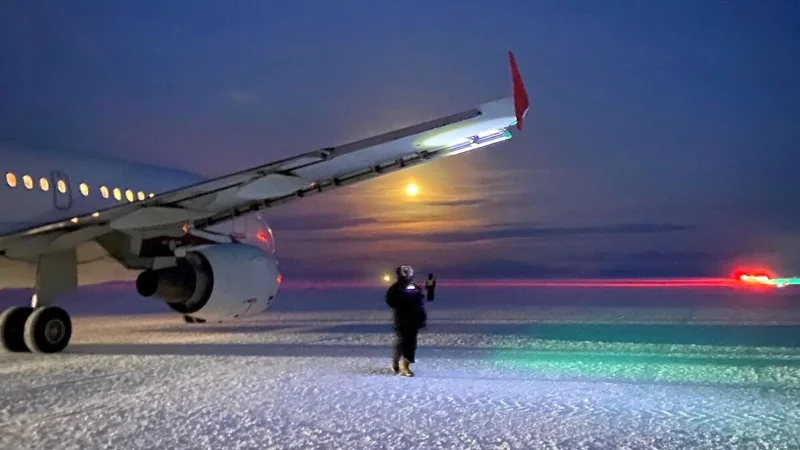
An American in the United States Antarctic Program was evacuated from Antarctica on July 31 after a medical emergency at McMurdo Station, then admitted to Christchurch Hospital in serious condition. The move came under dangerous winter conditions that turned a rescue into a race against distance, darkness and cold.
For readers searching now, the answer is in the scale of the operation: the U.S. National Science Foundation asked for help from the Australian Antarctic Division and the New Zealand Defense Force, and an Australian plane made the five-hour trip from Hobart to McMurdo Station. It arrived in complete darkness, with temperatures dipping as low as −43°C, before the crew transferred the patient aboard and flew on to Christchurch.

The U.S. National Science Foundation manages the Antarctic program, and the evacuation shows how dependent winter operations in Antarctica are on cooperation between countries when something goes wrong. In this case, the Australian Antarctic Division confirmed the rescue involved an American citizen, but no further details on the person or the medical emergency have been released.
That silence leaves the central fact intact: the patient was serious enough to require immediate extraction from McMurdo Station in the middle of winter, and serious enough to be admitted to Christchurch Hospital after a long overnight flight. What happened before the rescue remains undisclosed, but the outcome already makes clear how little margin exists for medical emergencies on the ice.
