


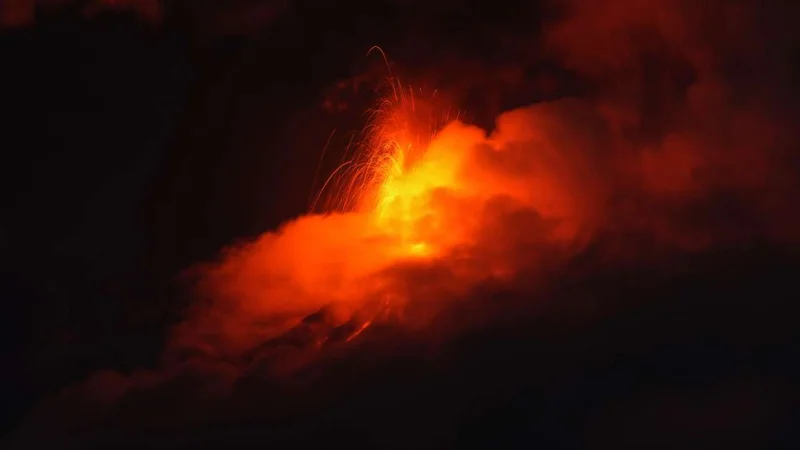
Guatemala's Volcan de Fuego erupted on Sunday night, forcing more than 650 people from several nearby communities to leave their homes as officials raised an Institutional Orange Alert. Nearly 300 of them were already in temporary evacuation centers by the time the first wave of evacuations settled into place.
Claudinne Ogaldes, the Executive Secretary of CONRED, said the evacuations were focused first on El Porvenir and Las Lajitas. That is the clearest sign of how quickly the eruption moved from alarm to displacement: the volcano was not just venting ash and gas, but also sending incandescent rock fragments, lava and pyroclastic density currents three to four miles down its slopes.

The eruption matters now because Fuego Volcano is active now, and the danger is not limited to one hillside. INSIVUMEH said 34 seismic events were recorded in Guatemala in the last 24 hours, while a permanent presence was kept at the entrance to the Acatenango volcano to prevent tourists from climbing. The monitoring response shows officials treating the eruption as a live threat, not a passing burst of smoke.
There is also a hard edge to the warning. Officials said additional communities could be forced to evacuate if volcanic activity intensifies, even as shelters were still taking in residents already moved out of harm's way. The unresolved question is not whether the volcano is active; it is how long the evacuation centers will have to hold and how far the evacuation order may spread if the mountain keeps escalating.
Fuego Volcano is Central America's most active volcano and has erupted more than 60 times since the 1500s. Its past is part of why this eruption lands so heavily in Guatemala today. In June 2018, the volcano killed more than 110 people and left another 197 reported missing, a memory that still hangs over every new alert. This latest eruption was also seen from Alotenango in Sacatepéquez department, about 65 kilometres southwest of Guatemala City.
