


Alexey Ríos García woke up on Monday on Havana's Malecón instead of in his bed, one of many Cubans who slept outside on the sea wall through another islandwide blackout. He used a piece of yellow foam as a pillow while trying to escape the summer heat.
The latest blackout, confirmed Sunday night by the state-run energy company, was the sixth islandwide collapse since January, when the Trump administration effectively cut Cuba off from oil. By Monday, authorities said they were working to get the power back on, but much of Cuba still had no electricity.

The outage came after sweeping failures across western Cuba the day before, including Pinar del Río, Matanzas and Havana, and after a year in which energy authorities reported two nationwide grid collapses in March and three in July. Rolling blackouts now last more than 20 hours a day, a measure of how far the system has fallen even before the latest failure hit.
The heat made the blackout harder to endure. On Sunday, temperatures reached 93 degrees Fahrenheit, or 34 Celsius, and felt like 106 F with humidity that reached 80 percent. On the Malecón, Elaine Delis Ramos curled up next to loved ones on a thick blanket, looking for even a small breeze. Ríos García was less resigned. “Things are only getting worse. Tomorrow it'll collapse again... and we'll be back to sleeping on the Malecón,” he said.
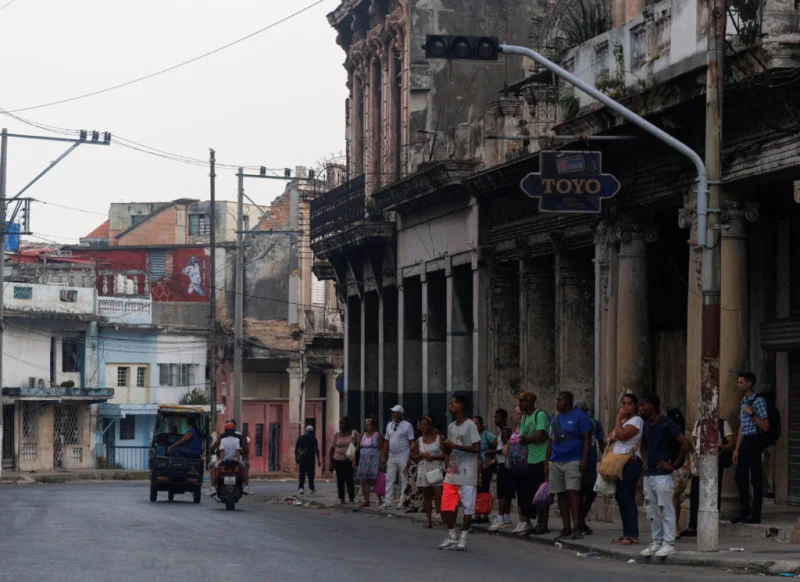
That fear lands in a country already stretched by a severe energy crisis, fuel shortages and a grid that has repeatedly failed this year. Public transportation in Havana has effectively collapsed because of a lack of fuel, and hospitals have sought to install solar panels to keep the lights on. The blackouts are no longer isolated disruptions; they are part of daily life for much of Cuba, and Monday's repairs do not answer the larger question of how long the system can hold at all.
