Retired Air Force Gen. Glen D. VanHerck said on July 30 that U.S. air bases could be hit by the same kind of drone attack that struck bomber bases deep inside Russia last year. His warning was blunt: the threat is already here, and it could show up inside the homeland without much warning.
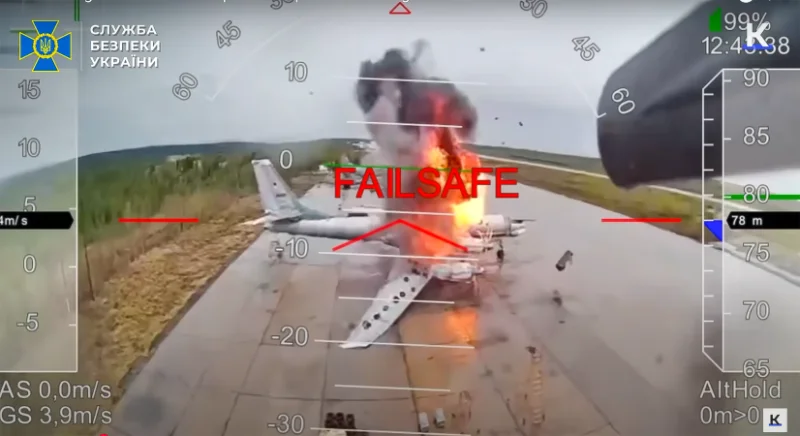
The timing matters because the June 1, 2025 attack in Russia changed what military planners have to imagine. Ukrainian forces secretly drove 18-wheeler trucks into Russia and launched 117 quadcopters loaded with explosives at strategic bomber bases, destroying roughly 40 bombers and early warning aircraft and causing roughly $7 billion in damage to Russian defense infrastructure. VanHerck said that kind of operation should not be treated as a distant lesson. "All of that could occur right here, right here in the United States of America," he said.

He was speaking about a threat that has already crossed into American airspace in smaller form. The Air Force saw unidentified drones fly for days over Langley Air Force Base, Va. in late December 2023, and later incidents followed at bases in Ohio, Utah, and the United Kingdom. That history gives his warning weight: these are not abstract scenarios, but repeated incursions around secure military sites.
Houston Cantwell, another retired Air Force brigadier general, said Operation Spiderweb was like a Hollywood-style stunt out of a Jason Bourne movie and showed how flexible small UAVs can be. He argued the Air Force should move beyond point defense and adopt a broader strategy that includes airborne early-warning sensors, a strike plan against enemy drone manufacturing, and a multilevel protective posture that can shift as threats change. That is the gap VanHerck was pointing to. Even heavily guarded U.S. bases can still be vulnerable if defenses are built only to shoot down drones after they are already in the air.
VanHerck said a homeland version of Operation Spiderweb, built in the central part of the country and aimed at critical infrastructure or other key locations, would demand a much wider response. Local citizens, local law enforcement, state agencies, federal agencies, the military, and the intelligence community would all have to piece together the threat before it becomes an attack. His conclusion was sharper than a warning: the United States is still not organized to meet a drone campaign like the one Ukraine used against Russia, even though the next one could be launched from a truck and unfold fast.