


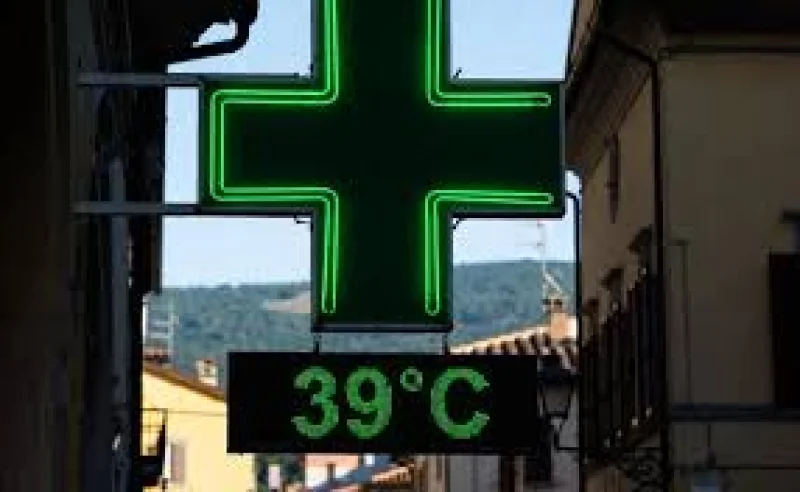
Italy is putting almost all of its major cities on the highest red alert as a new heatwave tightens its grip on the country. By Monday, the Italian health ministry said 25 of Italy's 27 major cities would be under the top warning, leaving only Reggio Calabria and Messina on amber.
The move came after health officials said 19 cities from north to south were already at red alert on Saturday, with Rome, Milan, Venice and Naples among them. Temperatures had already climbed into the mid-30s C in many places, and the ministry warned that the danger was no longer limited to the elderly, very young children or people with chronic illnesses. It said even healthy and active people were at risk if they stayed out in the heat.
The warning matters today because it covers nearly the whole urban network at once. The ministry urged residents in affected areas to avoid exposure to heat and direct sunlight between 11:00 and 18:00, stay indoors and drink plenty of fluids. That advice reflects how quickly the heat has spread: a subtropical anticyclone from North Africa is strengthening over the Mediterranean, pushing a hot air mass across Italy and feeding the wider spell that is sweeping much of Europe.

There is a sharp edge to the warning. The heat bulletin is almost nationwide, yet it still leaves a small escape hatch in the south, where Reggio Calabria and Messina are expected to remain on the second-highest amber alert by Monday. That contrast shows how broad the emergency has become and how unevenly it is landing, even as the rest of the country moves to the highest level.
The broader picture is getting worse across the continent. Several European nations are battling devastating wildfires after successive heatwaves created favourable conditions for blazes. In France, about 2,500 people were evacuated in the south-eastern Var region on Friday evening after a blaze reignited, while a massive fire in the south-western Gironde region was brought under control and about 200,000 evacuated residents were able to return home. In Greece, hundreds of people, mostly tourists, were evacuated by sea from a coastal town of Viotia. In Spain, more than 200,000 hectares had burnt in 2026, roughly five times above the average by this point in the year, and EU data showed burnt land in Portugal was also higher than usual.
Copernicus Climate Change Service says Europe is heating up twice as fast as the global average, and the current alert in Italy fits that pattern. The immediate question is not whether the country will keep issuing warnings, but how long the red-alert conditions will hold once Monday arrives and whether the heat will ease before more cities are pushed into the same category.
