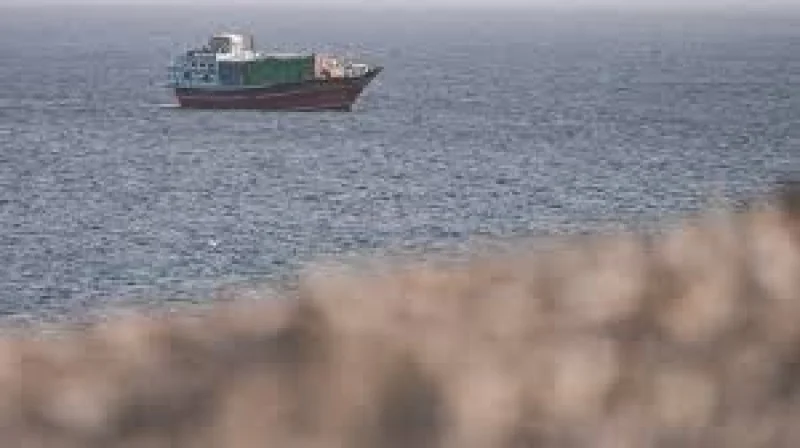
Iran said tanker transit through the Strait of Hormuz is not possible because of what it called aggressive actions by the United States, putting the world’s most important oil chokepoint back at the center of the crisis. The statement came as the conflict entered its sixth month and most shipping through the waterway had already been halted.
That matters because the Strait of Hormuz previously carried a fifth of the world’s oil and natural gas, and even partial disruption has been enough to move prices sharply. Brent crude climbed from about $70 to above $100 a barrel for much of March, April and May, and at one point reached $126, while supplies ran low in some countries and fuel rationing was reported in Australia, Nepal and Sri Lanka.

Patrick Galey said the crisis has not looked the same for everyone. “There are constituencies around the world who are having a very good crisis, and the oil producers are one of them,” he said, pointing to Exxon Mobil’s second-quarter profit of $14.53 billion, up 105% from the same time a year ago, and Chevron’s $12.07 billion, up 385% from the same quarter last year. In a market where tanker traffic has been choked and every delay ripples outward, those earnings show who has been insulated and who has not.
What remains unclear is whether Iran’s position amounts to a formal closure or a practical shutdown created by force and fear. The language used by Tehran was absolute, but the reality on the water has been messier: shipping had already been severely constrained rather than cleanly sealed off, which is why the same chokepoint can still be described as open in name and closed in practice.
The broader standoff has also fed into other flashpoints around the region. On Friday, around midnight, Israeli forces triggered very powerful explosions in the area of the Beaufort fortress, and Benjamin Netanyahu and Israel Katz said the army had destroyed terror tunnels in the Beaufort area using approximately 700 tons of explosives. Lebanon's National News Agency reported the blasts near the fortress, and the culture ministry warned that vibrations may have caused damage close to UNESCO-listed Beaufort Castle, which was added last week to UNESCO's List of World Heritage in Danger. For now, Iran’s warning leaves tanker operators, oil markets and governments with the same unresolved question: whether the strait is being shut by decree, or by events fast enough to make the difference irrelevant.