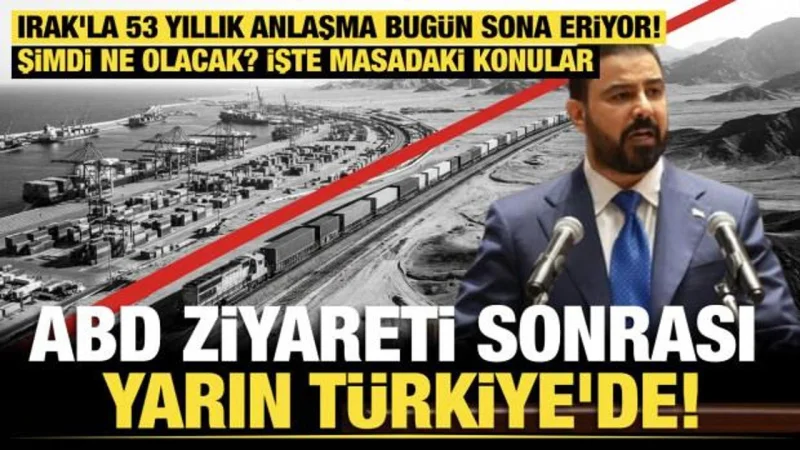
Iraq’s Prime Minister Ali Zeydi will make an official visit to Ankara tomorrow, opening a round of talks that could shape the next phase of ties between Türkiye and Irak. The visit was announced by Burhanettin Duran on NSosyal.
The agenda is broad on paper and heavy in practice: security, trade, energy, transport and water management are all set to be reviewed, alongside regional and global developments. But the issue drawing the most attention is the future of the Kerkük-Ceyhan petrol boru hattı anlaşması, which is due to expire on 27 Temmuz 2026.
That deadline matters because Ankara told Bağdat on 21 Temmuz 2025 that it would not extend the current arrangement one year before it ends. Since then, the two sides have been negotiating a new deal for about a year, without reaching agreement. Türkiye has also floated a new pipeline project that would run to Basra, a sign that the debate is no longer only about keeping the old route alive, but about what replaces it if the talks fail.

The pipeline itself has a long and troubled history. It was first signed in 1973, later extended in 2010, and then became the center of a legal fight after Türkiye was accused of helping oil exports carried out between 2014 and 2018 without approval from Irak’s central government. Arbitration forced the line shut for about 2.5 years and ordered Türkiye to pay $1.5 billion in compensation. Oil flows resumed in late last year, but a second arbitration file covering the post-2018 period is still open.
Alparslan Bayraktar has said the Irak-Türkiye Petrol Boru Hattı has a daily capacity of 1.5 million barrels, yet it never reached full use and at times fell to 25 percent. He also said the crude line needs to be connected directly to southern Irak. That is the practical hurdle behind the diplomacy: a route that can move oil, avoid another legal rupture and give both sides a settlement they can actually live with.
If the current talks stay stuck, the closure date in 2026 becomes more than a contract deadline. It becomes the point at which Ankara and Bağdat will have to choose between a new agreement, a new route or a shutdown that would send another dispute back into the system.