


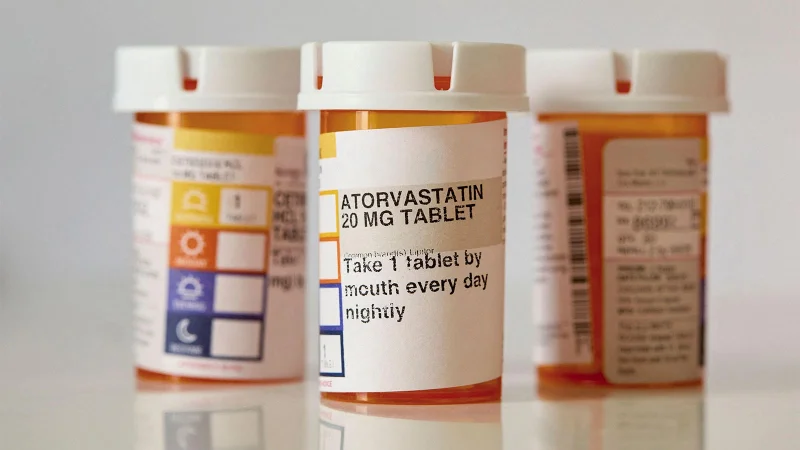
A new U.S. cholesterol guideline would expand statin eligibility to 21.5 million adults and push preventive treatment toward younger people with lower estimated risk. Using NHANES data from 2017 to 2023, researchers estimated that 87.5 million nonpregnant U.S. adults age 30 to 79 would qualify for lipid-lowering therapy under the 2026 guideline.
That shift is why doctors are paying attention now. The updated recommendation changes who gets talked to about medication before heart disease appears, and it does so by leaning on PREVENT rather than the older pooled cohort equations. Under the new approach, lipid-lowering therapy can be considered at a 10-year PREVENT-ASCVD risk estimate of 3% to less than 5%, and again at 5% to less than 10%, widening the group eligible for primary prevention.
For Timothy Anderson, that is not a small recalibration. He described the move as a sea change for doctors counseling patients, especially because people flagged with high cholesterol in their 30s and 40s were previously steered toward diet and exercise unless they already had heart disease or another major risk factor such as diabetes. In the new analysis, the mean estimated 10-year ASCVD risk was 3.1% for newly statin-eligible adults, compared with 6.1% for adults who were already recommended statins under the older guideline.

The newly eligible group is also different in age and risk profile. The 21.5 million adults who would newly qualify are largely younger and lower risk than people previously recommended statin therapy. That matters because the guideline is not simply adding more older adults with established risk; it is redrawing the boundary around prevention and bringing medication discussions earlier in life, when risk has not yet climbed as high.
Still, the scale of the change depends on which projection is used. One NHANES-based analysis found that the new guideline reclassifies more than one in five adults, with two-thirds moving to lower-risk categories and one-third moving higher. In that projection, men were reassigned downward in risk 24.2% of the time, Black individuals 29.6% of the time and current smokers 27.7% of the time, while women were reassigned upward 11.1% of the time and people with diabetes 20.4% of the time. A separate NHANES analysis, using adults age 40 to 79 years, found the proportion who may be recommended lipid-lowering therapy was 49.6% under the 2026 guideline and 49.4% before it, with no significant net change at the population level.
That gap is the part clinicians will have to sort out in practice. The 2026 dyslipidemia guideline substantially expands the U.S. population recommended for primary prevention statin therapy, predominantly in lower-risk individuals, but the actual change in prescribing will depend on how doctors use PREVENT risk estimates in the exam room. Allison Peng said the lack of a significant net change suggests that recalibration with PREVENT-ASCVD does not necessarily mean fewer people will get evidence-based preventive therapy overall, even as the patients most likely to be discussed for treatment shift younger.
The bottom line is that the new guideline broadens the statin conversation rather than narrowing it. Doctors are being asked to consider more people earlier, especially those whose risk would have looked too low under the older framework, and the real test now is how quickly that change moves from recommendation into routine care.
