


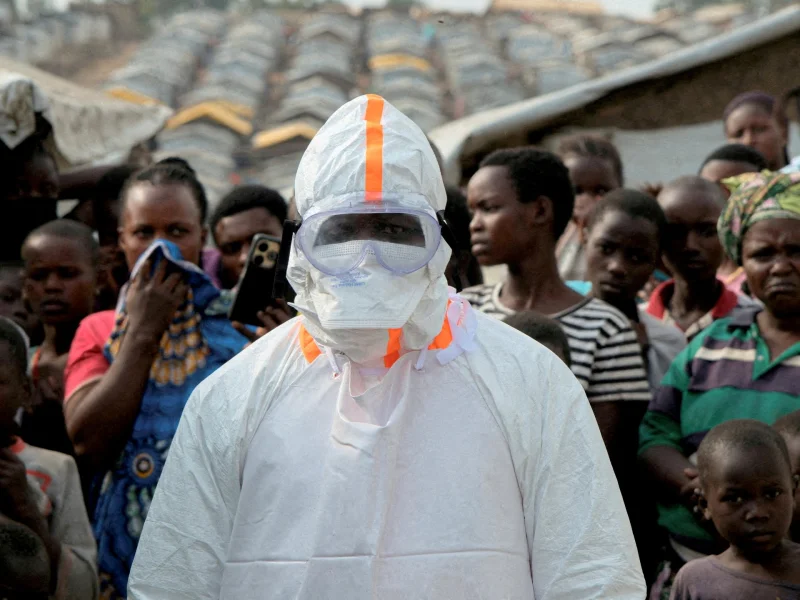
The number of confirmed Ebola infections in the Democratic Republic of the Congo has risen to 3,200, with at least 1,405 deaths, as the disease outbreak pushes into five provinces and deepens a crisis that has already strained hospitals and aid teams.
The new tally matters now because it jumped by about 1,000 cases in 10 days, a pace that signals both wider spread and sharper detection. Nearly 90 percent of the infections are still in Ituri, but the virus is no longer confined there. It has spread into two new provinces, widening the geographic footprint of the country's 17th Ebola outbreak.

Hedley Tah said the challenge is not only reaching people but getting there at all. He said the humanitarian community wants to help, while UNHAS is moving samples for lab testing to keep traceability going. That work is crucial because the outbreak is caused by the Bundibugyo strain, for which there is no approved vaccine or treatment.
The rising count is not as simple as a clean measure of faster transmission. Authorities said improved detection and testing helped identify more infections, which means some of the jump reflects better visibility into the outbreak rather than spread alone. Even so, response efforts are being slowed by difficult access and strikes by healthcare workers demanding unpaid wages, with hospital operations disrupted in some places.
On Friday, Oxford University said the first volunteer group had received an experimental vaccine targeting the Bundibugyo strain. It is an early step, not a solution, and it comes while people in the Democratic Republic of the Congo are still facing an outbreak that was declared on May 15 and has already killed more than 1,405 people. Ebola spreads through contact with bodily fluids and causes hemorrhagic fever, and it has killed more than 15,000 people across Africa over the past 50 years. The next test is whether the response can keep pace with the virus before the spread into the new provinces becomes even harder to contain.
