


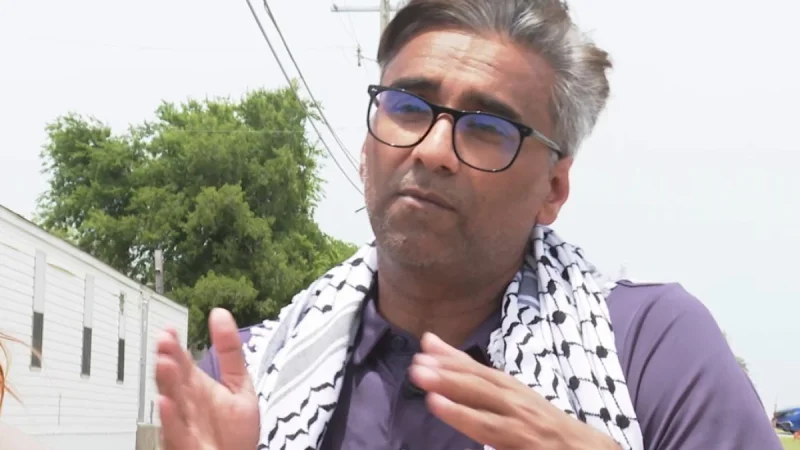
A federal appeals court on Thursday refused the Trump administration’s bid to put Badar Khan Suri back into detention, leaving the Georgetown University scholar free while his case continues. The court also rejected the government’s effort to move the fight from Virginia to Texas.
The ruling keeps intact the federal court order that released Suri on bail after he spent nearly six weeks at a Texas detention center. Suri, an Indian postdoctoral fellow at Georgetown University who is married to a US citizen, was arrested in March 2025, and the new decision means he remains out of custody as the legal battle over his detention continues.
The fourth circuit court’s ruling was a 2-1 decision. It upheld the earlier order that sent Suri home on bail and sided with his challenge under habeas corpus, a result that gives immigration detainees another route to argue that their confinement can be reviewed in federal court. The panel’s split matters because it shows this was not a unanimous reading of the law; two judges accepted that Suri could press his detention claim now, while one did not.

The court’s opinion also rejected the government’s attempt to shift the case out of Virginia and into Texas, calling that move incompatible with judicial review of detention claims like Suri’s. In the court’s words, denying review would misread Congress’ statutes and weaken the protections the writ of habeas corpus guarantees to all persons on American soil. The judges also said that waiting for removal proceedings would do a detainee no good if the challenge is to the detention itself and the issue is effectively unreviewable later.
That reasoning cuts against earlier appeals-court rulings in similar cases. In January, another decision favored the government in Mahmoud Khalil’s appeal, and earlier this week a different appeals court reached the same conclusion in Mohsen Mahdawi’s case. Noor Zafar, speaking for Suri, said the federal government cannot do an end run around the first amendment by locking people up for their speech and denying them their day in court.
The clash among the United States Courts of Appeals raises the odds that the question will be pushed higher, but a Supreme Court review is not automatic. Justices do not have to take a case even when appeals courts disagree, and the issue will matter most if the split keeps widening or if lower courts continue to issue opposite outcomes in detention cases tied to speech. For now, Suri’s release stands, and the government has lost another round in its effort to keep him behind bars.
