


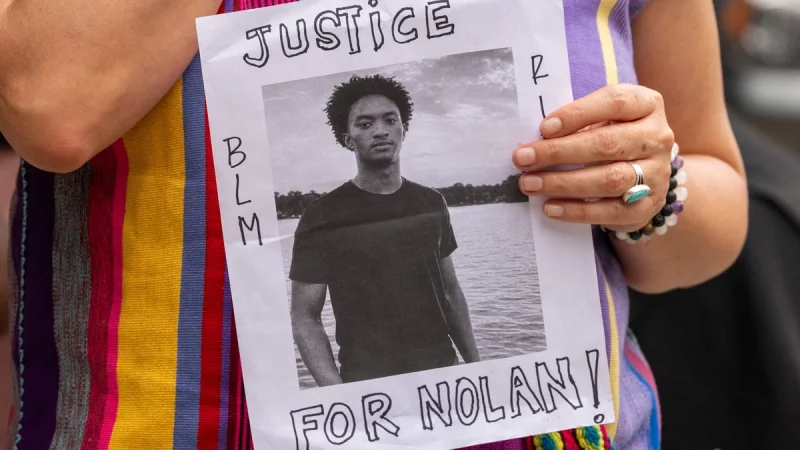
An independent autopsy has not been able to determine how Nolan Wells died, leaving the central question in the case unanswered on July 22. The report also could not establish the manner of death, a result that keeps the death of the Mississippi man in dispute even as investigators continue to review what happened after a July Fourth boat trip.
Wells disappeared after traveling with friends to Horn Island to celebrate the Fourth of July, and his body was found nearly three weeks later. His family had already launched its own independent investigation after saying it did not trust the process in Mississippi, and the new autopsy result now sits at the center of a case that has drawn attention from Colin Kaepernick, Ben Crump and Nancy Grace.
The details of that day remain fractured. GPS data obtained by CBS News from the Mississippi Department of Marine Resources showed the boat reportedly arrived around 11:14 a.m. and left at 4:31 p.m., while Wells’ friends told Crump they last saw him around 3 p.m. Christine Wonsley said a friend of Wells contacted her around 11 p.m. that night, and the family met with law enforcement around midnight before Elmore Wonsley left by boat at 5 a.m. to search for his son.

Horn Island sits about 10 miles off the coast of Mississippi and can only be reached by private boat. The National Park Service says there is no staff, drinking water, shelter, facilities or communication on the island, which helps explain why a land-and-water search stretched across July 5 and July 6 before the United Cajun Navy announced that a body had been found on the northwest end of the island. The body was later identified as Nolan Wells.
What has not been resolved is the gap between the last reported sighting and the discovery. Officials in Jackson County have said they have not found signs of foul play, but Wells’ family fears the case could be written off as an accidental drowning before the unanswered parts are fully explained. Todd Terrell said in a recent interview with Nancy Grace that Wells was found face down and fully clothed, while the United Cajun Navy later said he was wearing only swim trunks, a discrepancy that underscores how many basic facts are still being argued over.
Nadine Smith said the case has revived familiar anxieties among Black Americans, calling it both a mystery and a reminder of lived pattern recognition in Black America. That broader reaction is part of why the case has stayed in public view: it is not only about how a young man died, but whether the final explanation will match the facts investigators can actually prove. For now, the autopsy has narrowed nothing, and the next answer has to come from the missing hours between the boat trip and the body on Horn Island.
