


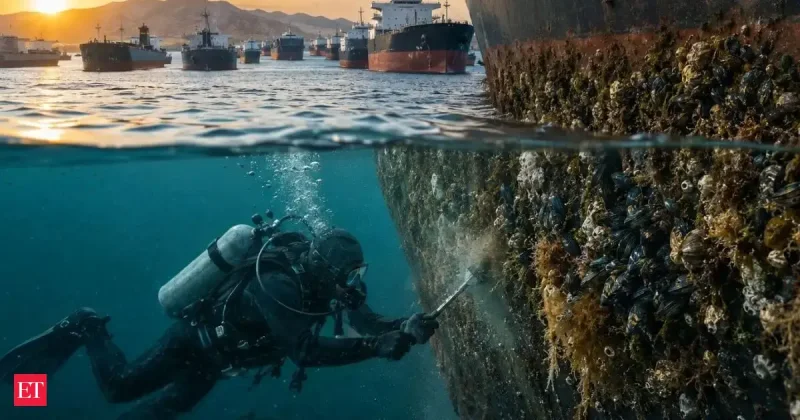
Nearly fifteen hundred commercial vessels are now stuck in the Persian Gulf after fighting closed the Strait of Hormuz, turning a shipping bottleneck into a slow-moving environmental problem. While the ships sit idle, marine organisms are building up on their hulls, and that buildup is already raising concern among scientists who warn of a possible invasive-species event.
The reason the number matters is simple: this is not a handful of delayed ships but a large fleet immobilized at once, with each vessel giving marine life time to attach, spread and multiply. The Strait of Hormuz closure is the immediate cause, and the backlog means the ships are not moving through water fast enough to shed the growth that accumulates on their hulls.

That growth is more than a stain. Organisms on ship hulls can increase fuel consumption significantly, which means the vessels are not only idle but also becoming more costly to operate once they move again. For a fleet this large, even a modest rise in drag becomes a wide-scale operational burden, and the environmental risk grows with every day the ships remain in place.
The friction is plain: the vessels are commercial carriers, but their stillness is what is creating the problem. Idle ships can become breeding grounds for marine invasive species, so the very pause caused by the closure is also giving those species a better chance to travel with the fleet if it starts moving without tighter controls.
That is why scientists are urging stricter rules now, not later. They want measures that reduce the chance of a major bioinvasion event before the stranded vessels leave the Persian Gulf and carry hull-fouling organisms into new waters. The unresolved question is not whether the backlog is real; it is how long these ships will remain trapped before the risk is allowed to move with them.
