


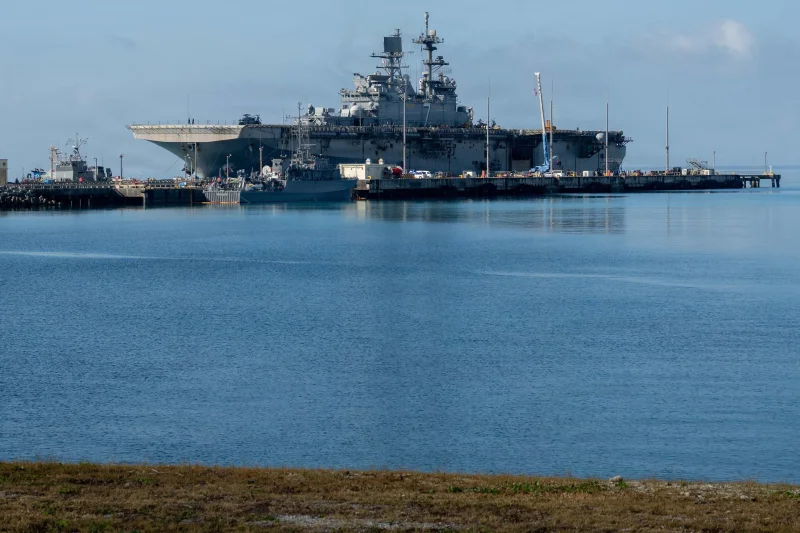
The USS Tripoli arrived in Okinawa, Japan, on Wednesday, bringing a six-month deployment to its last stretch as the ship began offloading the 31st Marine Expeditionary Unit at White Beach Naval Facility. The amphibious assault ship is due to return to its Sasebo homeport after personnel and equipment come ashore.
For readers tracking why Marines are being searched now, the move marks the end of a deployment that did not stay in one theater. The Tripoli led the Tripoli Amphibious Ready Group through the U.S. 5th and 7th Fleet areas, first in the Pacific Ocean and then in the Middle East, where it arrived on March 27, 2026.

That shift is what gives the deployment its weight. In early February to early March, the ARG-MEU took part in Exercise Iron Fist 26 with the Japan Self-Defense Forces, a bilateral drill that included field training, close-air support, urban operations and simulated air, ground and amphibious assaults. After that, the same force was dispatched to the United States Central Command area of responsibility and went on to join the U.S. military blockade in the northern Arabian Sea during Operation Epic Fury, which began on February 28, 2026.
Chris Niedziocha said the deployment showed what a forward-deployed Marine Air-Ground Task Force can do when plans change fast. He said the team completed more than 1,600 mishap-free hours of combat aviation missions, moved about 5,000 personnel, transported 800,000 pounds of cargo and refueled more than 300 aircraft ashore and underway. He also said the team adapted without losing sight of the mission and performed flawlessly under changing conditions.
The Tripoli Amphibious Ready Group included USS New Orleans and USS Rushmore, and the ship’s return closes out a run that tied together training with Japan and combat operations against Iran in the same deployment. The ship is an America-class amphibious assault ship capable of carrying F-35Bs, but the remaining question is the exact timing of its return to Sasebo after the offload in Okinawa.
