


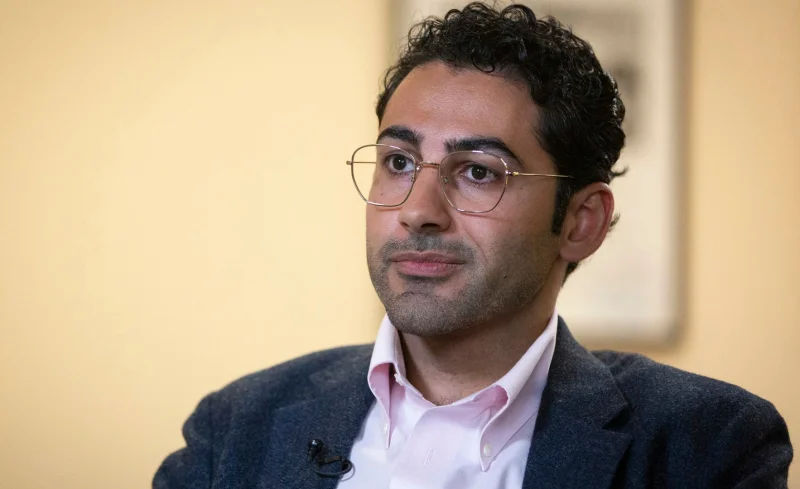
A United States appeals court on Tuesday overturned the order that had freed Mohsen Mahdawi from immigration detention, reversing a lower court ruling even as he remained out of custody while fighting deportation.
The decision puts Mahdawi back at the center of a case that has become a test of how far the Trump administration can go in targeting campus activists tied to Palestine. He was arrested in April 2025 after attending what he believed was an interview related to his US citizenship application, then detained for two weeks and charged with no crime.
US District Judge Geoffrey Crawford had ordered Mahdawi's release in a 2025 decision, saying he enjoyed the same free speech rights as US citizens and accusing the Trump administration of causing great harm to someone who had committed no crime. Even after the appeals court acted, Mahdawi was not immediately back in custody, leaving the practical effect of the ruling unresolved for now.

The legal fight has stretched through several layers of review. In February, immigration judge Nina Froes blocked the Trump administration's attempt to deport Mahdawi, finding the government had failed to meet its burden of proof and dismissing key evidence as inadmissible. The Board of Immigration Appeals later reinstated deportation proceedings in May after overturning that February decision, and the Trump administration later fired Froes.
Mahdawi has described himself as a stateless Palestinian refugee from the occupied West Bank and has accused the Trump administration of weaponising the immigration system to silence his political views. He said the government was trying to punish and deport him because it opposed his peaceful advocacy for human dignity and equal rights for Palestinians.
The administration has argued that Marco Rubio has the authority under federal immigration law to seek deportation of non-citizens whose presence could have adverse foreign policy consequences for the US. That broad legal theory has helped turn Mahdawi's case into one of the most closely watched challenges to the crackdown on pro-Palestinian campus activism.
The ruling deepens the pressure on Mahdawi without yet answering the most immediate question facing him: whether immigration authorities will move to take him back into custody now that the release order has been undone. For now, he remains free, and the case continues to sit at the point where immigration law, speech rights and political retaliation collide.
