


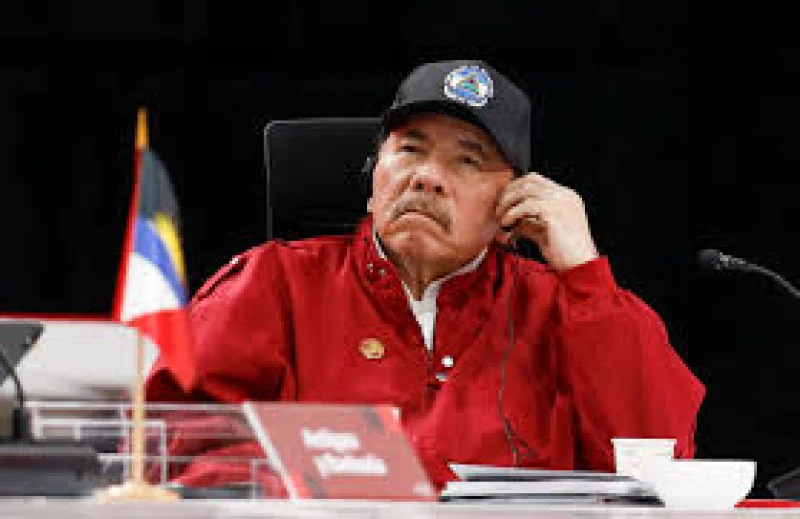
Daniel Ortega said on Sunday that Nicaragua will hold no further elections, a declaration that would shut down the country’s next scheduled vote and lock the opposition out of any path back to power. He said he would work with the National Assembly and other institutions on new laws to build a barrier against what he called coup plotters and traitors.
The announcement came during the official ceremony marking the 47th anniversary of the 1979 Sandinista revolution, a date Ortega used to cast himself once again as the heir to the revolution that overthrew Anastasio Somoza. He has been in office since 2007 and is now 80 years old, with the election due next year suddenly turned into a question of whether Nicaragua will still even keep the machinery of voting in place.
What Ortega did not spell out matters as much as what he did. He gave no detail on whether the next election would be cancelled outright or left on the calendar with the opposition barred from taking part. That ambiguity leaves open the legal route his government would use to turn a political threat into a formal ban, even after saying the country will have no more elections.

The move fits a pattern that has narrowed Nicaragua’s political space year after year. During the 2021 campaign, Ortega’s regime outlawed parties and jailed all opposition presidential hopefuls. Last year, he pushed through constitutional reforms that extended the presidential term from five to six years and promoted Rosario Murillo to co-president, tightening control over the state as the erosion of democracy continued.
Tiziano Breda said Ortega and Murillo have sealed Nicaragua’s transition to a full-fledged family dictatorship. That judgment lands against the memory of the 2018 protests, when a violent crackdown killed more than 350 people, wounded hundreds, jailed thousands and forced nearly 1 million Nicaraguans into exile. Local media reported that thousands of state employees were coerced into attending Sunday’s ceremony, underscoring how little room remains for dissent when the state is also the crowd.
Ortega’s next move is already defined in principle, if not in detail: he says he will work with the congress he controls to pass the laws he wants. If those laws are written to block opposition participation rather than formally cancel elections, Nicaragua could keep the appearance of a vote while stripping out competition. If they do the opposite, the country will have crossed from managed democracy into open one-party rule.
