


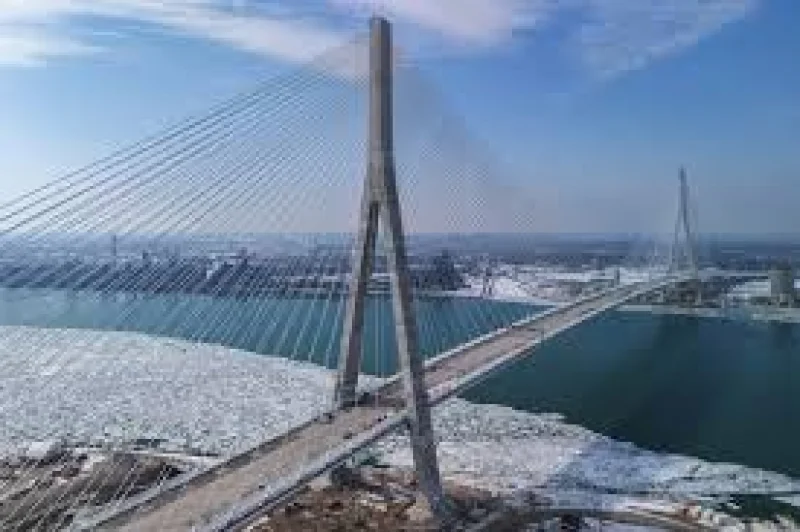
Canada said on 10 July that it had reached a deal with the US to clear the way for the Gordie Howe international bridge to open on 27 July, ending months of delay over the publicly owned crossing between Detroit and Windsor, Ontario. The $4.7bn bridge had been expected to hold a ribbon-cutting in early June before that ceremony was abruptly cancelled.
The timing matters because the bridge was supposed to be open earlier this year after eight years of construction, and June deadlines came and went while the dispute dragged on. Rashida Tlaib, whose district includes south-west Detroit, has pressed the issue as cross-border truck traffic waited for a crossing that was meant to ease pressure on the Detroit River route.

The bridge is jointly owned and operated by Michigan and the Canadian government, and Canada paid for its construction. That left critics asking why a project built with public money was stalled for months while the nearby Ambassador Bridge kept handling business as North America’s busiest international crossing. The new span was planned as a symbol of US and Canada’s close bond, but the delay turned it into a political fight instead.
The friction has been hard to ignore. Matthew Moroun owns the Ambassador Bridge, a 93-year-old span that takes as many as 3m trucks a year and can collect up to $100 on each truck. It has also been cited for safety violations in recent decades, with narrow lanes that are considered a danger for first responders. Moroun donated $1m to a Trump political action committee in January and met Howard Lutnick in February; hours later, Donald Trump threatened on Truth Social not to open the Gordie Howe bridge. Congress members Robert Garcia and Rashida Tlaib later accused Moroun of using his influence as a donor to derail the project and protect his company’s bottom line.
The deal announced on 10 July appears to have settled the dispute by putting a formal condition around toll changes: if fees are lowered below regional averages, US government approval will be required. That leaves the bridge on course for its 27 July opening, but it also shows how far the fight reached into the politics of both countries. The unresolved question is not whether the bridge opens now; it is how much of the delay was driven by a private owner’s interests, and how quickly the crossing can start carrying the trucks and drivers it was built to serve.
