


American forces bombed Iran for an eighth straight night early Sunday, and Tehran answered by firing at U.S. allies across the Persian Gulf region. The latest U.S. strikes, which U.S. Central Command said had concluded early Sunday, were carried out after two American service members were killed in Jordan on Friday.
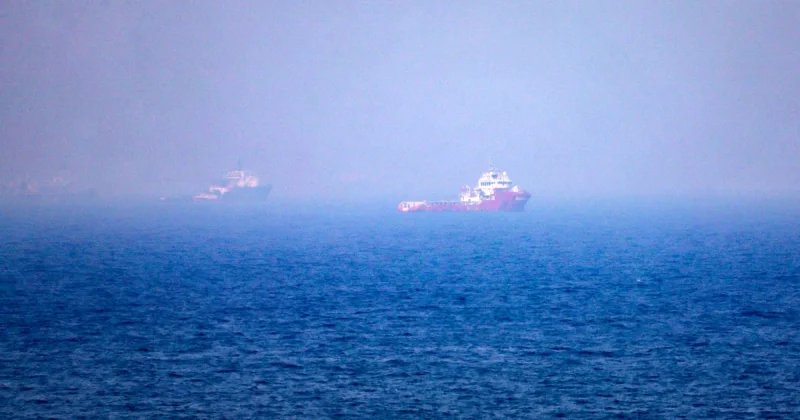
U.S. Central Command said the attacks were meant to swiftly punish Islamic Revolutionary Guard Corps forces and to further degrade Iran’s ability to threaten shipping in the Strait of Hormuz. The strikes hit coastal surveillance and air defense sites, maritime capabilities, and missile and drone storage facilities, underscoring how the fight has moved from a single retaliation into a wider campaign tied to one of the world’s most important shipping lanes.
That makes Chris Wright’s update on oil flow the clearest sign that the confrontation has not yet choked off the route both sides keep invoking. The U.S. Energy Secretary said on Sunday that oil was still moving through the Hormuz channel at just under 14 million barrels a day, about two-thirds of pre-conflict traffic. That is not normal, but it is movement, and it means the dispute has not yet turned into a full interruption of the global supply line the interim peace deal was meant to protect.

Iran, for its part, said on Saturday that it was suspending its commitments under the interim peace deal and accused Washington of violating the pact first. Sunday’s strikes reached deep into that breakdown: Iranian attacks hit a Kuwaiti power and water desalination plant for the second time in two days, Bahrain said it intercepted attacks, and Jordan said it shot down three of four Iranian missiles aimed toward its territory. Israel also warned that projectiles fired toward Aqaba could spill over into its territory for the first time in weeks.
The sharpest contradiction came around the Darkhovin nuclear power plant in Khuzestan province. Iran’s atomic energy agency said U.S. strikes hit the unfinished site, but the International Atomic Energy Agency said Darkhovin held no nuclear material and posed no radiological risk. That gap matters because it separates battlefield claims from nuclear danger, and on this evidence the site was damaged, but not turned into a radiological emergency.
Iranian authorities said 50 people were killed and 517 were wounded in the latest American strikes, while Mojtaba Khamenei called Donald Trump’s signature on the interim deal “utterly worthless and devoid of credibility.” Trump had already brushed aside Tehran’s move, saying, “I couldn’t care less.” Those words leave the talks where the bombs have left them: collapsed, contested, and with no clear sign either side is ready to stop.
