


JD Vance said Jeffrey Epstein seemed connected to elements of the Israeli deep state and the highest levels of American intelligence during a nearly three-hour Joe Rogan interview on Wednesday. The remarks put Epstein back at the center of a sprawling argument that has followed him since his death in a New York City jail cell in 2019.
The interview drew more than a million views on YouTube in less than 24 hours, giving Vance’s comments a much larger audience than a routine campaign or television appearance. Vance also said the Trump administration had screwed up its communications around the Epstein files, turning a broad discussion of foreign policy and the war on Iran into a fresh round of scrutiny over how the case has been handled.
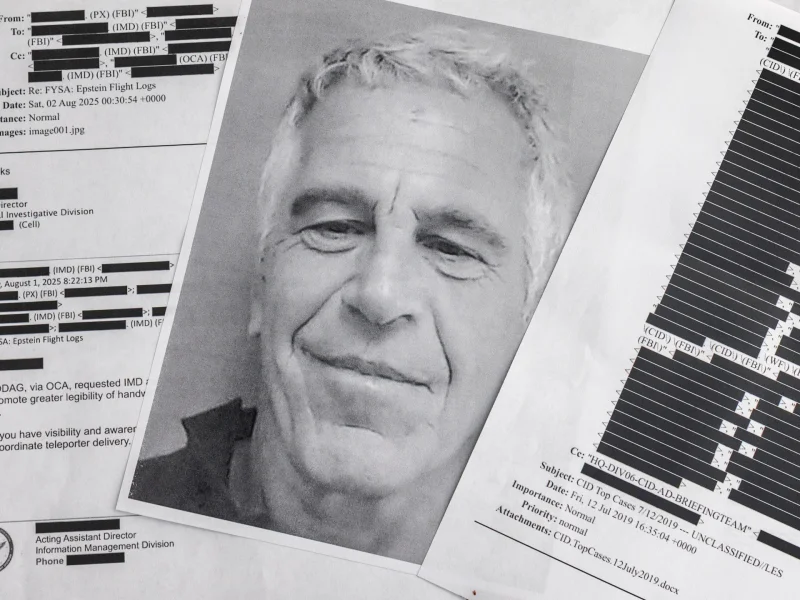
The timing matters because the US Department of Justice released 3.5 million files related to Epstein in January 2026, and none of them explicitly show that he was an intelligence asset. That has left room for speculation, but not proof. Epstein had already been convicted of several sex offences in the US, and in 2008 he pleaded guilty in a court in Florida and was convicted of procuring a minor for prostitution. Critics have long called that deal too lenient, and his victims have described a far wider sex trafficking network.

Vance’s case for an intelligence link rests on inference rather than direct documentation. He said Epstein clearly had connections to the upper levels of American intelligence and to the highest levels of Israeli intelligence, but he also said there were no documents tying him directly to US intelligence agencies or to a foreign agency. The gap is the point. A claim that someone moved in elite circles is not the same as evidence that an intelligence service ran him, and the files released in January did not close that distance.
There is, however, one official document that keeps the speculation alive. An FBI memo from 2020 said one of its sources believed Epstein was a co-opted Mossad agent who had been trained as a spy. The files also show extensive email correspondence between Epstein and senior Israeli figures, including former Defence Minister Ehud Barak and Mossad veteran Yoni Koren, who was a regular visitor at Epstein’s New York residence. Those records show access and association. They do not, on their own, prove control.
That is why Vance’s comments landed the way they did. He acknowledged the communications around the Epstein files were mishandled, but he still broadened the story into a theory about intelligence networks spanning the US and Israel. For now, the public record points to a convicted sex offender, a pile of newly released files, and a set of unanswered questions that are still being argued in public rather than settled by evidence.
