


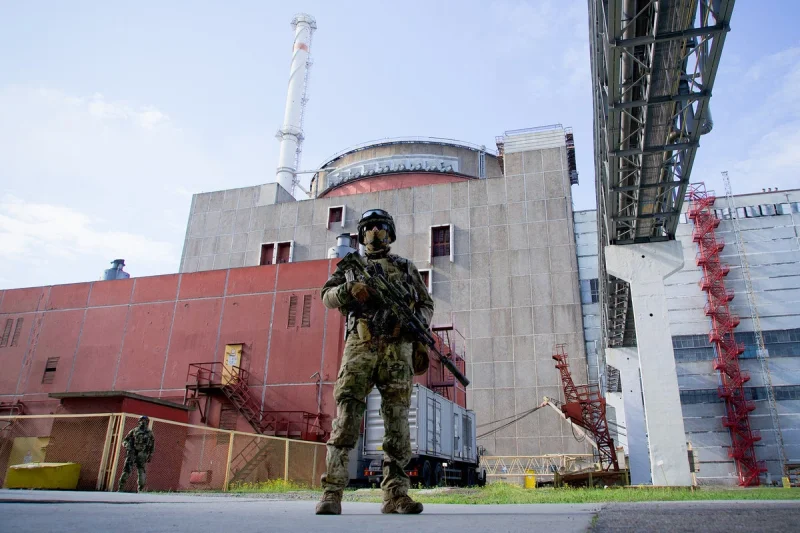
Russian authorities said a Ukrainian drone struck a service car near the Zaporizhzhia nuclear power plant on Wednesday, killing the plant’s chief engineer, Alexander Yakovlev, and the driver. The strike hit between the plant’s site and Enerhodar, Russian nuclear chief Alexei Likhachev said in a statement.
The killing matters because the plant is Europe’s largest nuclear reactor and one of the most sensitive sites in the Russia-Ukraine War. Russian troops captured it early in the invasion in 2022, and it has stayed under Russian control ever since, making every attack around it a risk not just for the war but for the people working inside it.
What makes the latest strike harder to separate from the wider conflict is the pace of attacks elsewhere. Ukraine’s drone forces said they had hit 116 vessels in the Sea of Azov in the past nine days, with their commander saying the aim was to damage Russia’s shadow fleet. Russia’s transport ministry said on Tuesday it was considering rerouting cargo from the Sea of Azov after the increased attacks on shipping, while Sergei Lavrov called the strikes acts of terrorism.
That leaves the familiar wartime question in a sharper form: whether the service car was targeted because Yakovlev was inside it, or whether the drone was aimed at movement near the plant and caught him in the blast. Russian officials have blamed Ukraine, but there was no independent verification in the material provided. The ambiguity matters because Moscow last week accused Ukraine of escalating terror actions against the power station, even as Russia and Ukraine were stepping up their battle over the Black Sea and key trade routes.
Donald Trump said he still believes Vladimir Putin is ready to make a deal, but three sources close to the Kremlin said Putin was rejecting calls to negotiate peace with Kyiv and was likely to escalate the conflict. For Yakovlev, that larger argument ended on a road near a nuclear plant; for everyone else around Zaporizhzhia, it has only made the next strike feel more likely.
