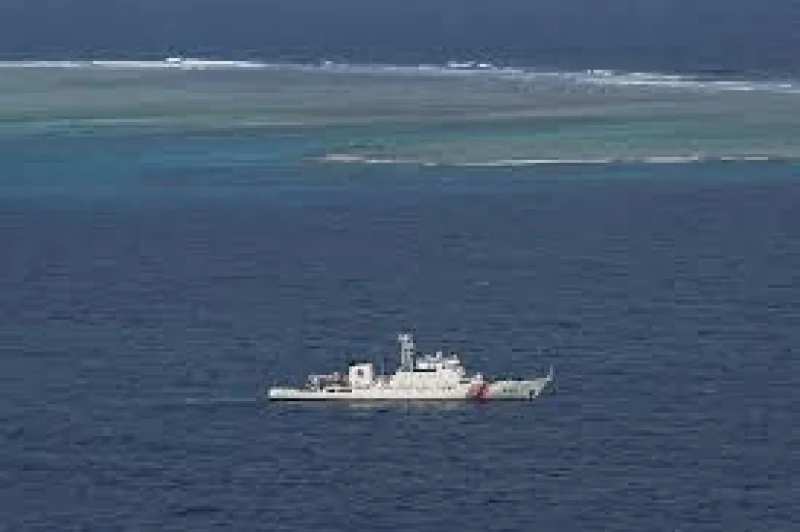
The United States, the United Kingdom and a dozen other Western and Asian countries on Sunday reaffirmed that China’s sweeping claims in the South China Sea have no legal basis under a 2016 arbitration ruling. The joint statement came on the 10th anniversary of the decision and said the governments strongly oppose destabilizing actions in the disputed waters.
The 14 nations included the Philippines, Japan, Australia, New Zealand, Canada, Germany, Italy, Estonia, Latvia, Lithuania, Romania and Slovenia, while the European Union issued a separate statement backing the ruling as a landmark for the peaceful settlement of disputes. That makes this more than a symbolic anniversary note: a broad bloc of governments publicly renewed the legal line against Beijing on a sea lane that carries global trade and sits at the center of repeated standoffs.

The ruling itself came from a tribunal established in The Hague under the United Nations Convention on the Law of the Sea. It found there was no legal basis for China to claim historic rights to resources in the South China Sea outside the territorial areas recognized under the convention, and it largely decided in favor of the Philippines after Manila brought the case in 2013 following a tense standoff that ended with Beijing effectively seizing a disputed shoal. For the countries that signed Sunday’s statement, the point is simple: the award is final and binding, and freedom of navigation and overflight must be upheld under UNCLOS.
China answered with the same argument it has used for years, saying the ruling is null and void and that it neither accepts nor recognizes it. That clash is the core of the dispute and it was sharpened again by the anniversary statements: one side says the tribunal settled the law, the other says the tribunal never mattered. The gap is not academic. On March 23, 2024, a Chinese coast guard ship used a water cannon on a Philippine resupply vessel, Unaizah May 4, near Second Thomas Shoal, a reminder that the legal fight still plays out in the water itself.
What happens next is still unclear. Sunday’s statements did not announce sanctions, patrols or any new enforcement step, only a public restatement of the same legal position the signatories have backed before. That leaves the South China Sea where it has been for years: a disputed and strategically vital waterway where law, power and routine intimidation keep colliding, and where the next confrontation may arrive before the next round of diplomacy does.