


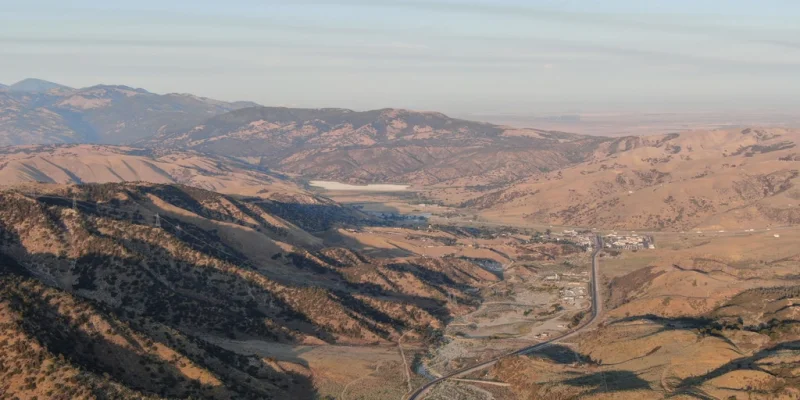
A 4.1-magnitude earthquake struck about 1 mile southeast of Frazier Park, California, at 3:38 a.m. Pacific time on Sunday, shaking part of Southern California while people were still asleep. U.S.G.S. data had first put the quake at 4.4 before later revising the estimate downward.
The change matters because early earthquake measurements are often refined as more readings come in, and the difference between 4.4 and 4.1 can shift how people understand what just happened. The quake was reported in a region where shaking is being watched closely, and U.S.G.S. data later noted that subsequent quakes have been reported in the same area.

That is not unusual after a main quake. Seismologists describe aftershocks as minor adjustments along the part of a fault that slipped during the first event, and they can arrive days, weeks or even years later. They can also be equal to or larger than the initial quake, which is why the first report is often only the starting point.
For people in Southern California, the practical question is not whether the ground moved once, but whether the sequence is still settling. U.S.G.S. scientists may update the shake-severity map as additional information is collected, and that can change both the reported footprint of the shaking and the number of places that were affected.
By Sunday, July 12 at 11:54 a.m. Eastern, shake data was current, and by 12:24 p.m. Eastern, aftershocks data was current as well. The clearest reading for now is that this was a light earthquake, but the final picture can still sharpen as more data is reviewed.
