


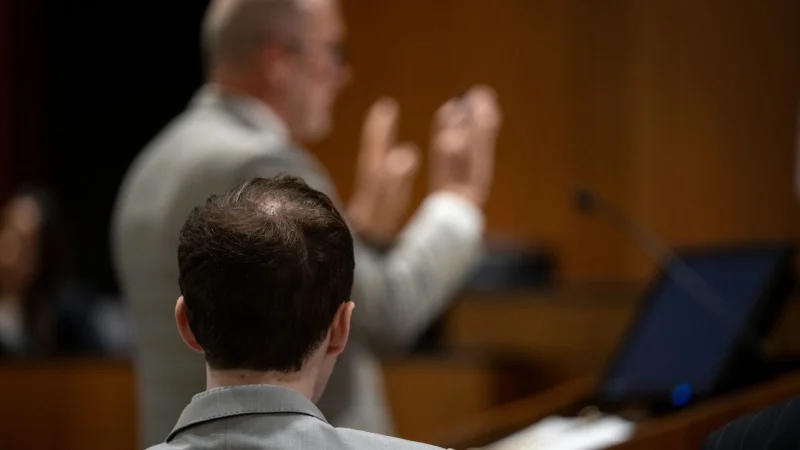
Erika Kirk asked Judge Tony Graf to let every exhibit tied to Charlie Kirk’s killing be shown in open court, pressing for full public viewing on the third day of Tyler Robinson’s preliminary hearing in Provo. She said she feared the spread of conspiracy theories if the courtroom kept showing evidence to lawyers and the court but not to the family that traveled there to witness it.
The request lands at a point when Graf is deciding whether there is enough evidence to send Robinson to trial, making the question of what the public can see part of the case itself. The filing said Erika Kirk and Charlie Kirk’s grieving parents were in the room while evidence was admitted, but some items were not available for them to view, a gap Jeffrey Neiman said breaches a Utah law that gives crime victims and their lawful representatives certain rights.

That argument matters because the hearing has already turned into a fight over visibility. Video footage allegedly showing Robinson entering the campus and climbing onto a roof was played, while law enforcement officers and university staff testified about what they saw and heard. Prosecutors and Robinson’s legal team clashed over circled highlights and other changes on some of the videos, and defense lawyer Michael Burt said those alterations could influence jurors.
Another dispute centered on DNA testing and the chain of custody for forensic evidence, including a screwdriver found on the campus roof, a Mauser 98 rifle found in nearby woodland and the towel it was wrapped in. The defense also sought to keep an interview with Lance Twiggs out of open court, with Richard Novak arguing that prosecutors could try to cast Twiggs’s statements as a confession by Robinson. Prosecutors said Robinson wrote, “I had the opportunity to take out Charlie Kirk and I’m going to take it,” and texted Twiggs that he had “had enough of his hatred.”
Twiggs spoke to authorities on 12 September and again on 20 April, after being granted immunity from prosecution. That leaves Graf with a courtroom record already crowded with disputed exhibits, contested edits and competing claims about fairness, and his next ruling on the open display of evidence will decide whether Erika Kirk gets the transparency she asked for or whether more of the hearing stays behind the lawyers’ table.
