


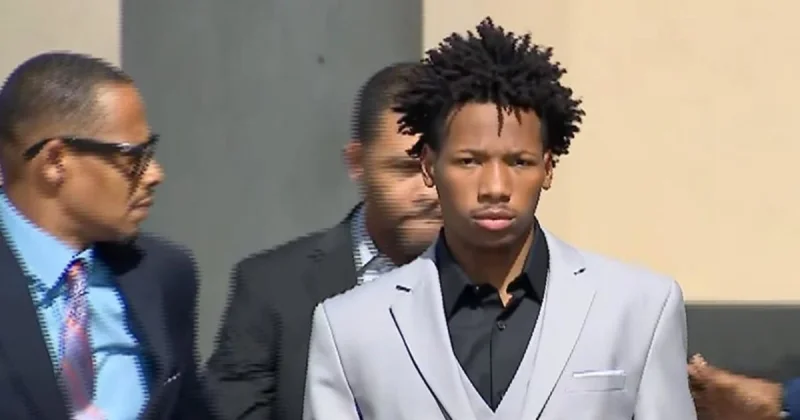
Attorneys for Karmelo Anthony filed an appeal on Tuesday and asked for a new trial, putting his murder conviction and 35-year prison sentence back before the court just weeks after a jury found him guilty in the fatal stabbing of Austin Metcalf. Anthony was 17 when Metcalf, also 17, was killed at a track meet in Frisco, Texas.
The filing turns on more than the verdict itself. Anthony’s new lawyers say the court wrongly limited public access to the trial, and they argue there had been an unwritten understanding between the state and defense to keep certain character evidence and other offense evidence out of the case. They say prosecutors later backed away from that understanding, and that move denied Anthony the chance to testify in his own defense. They also criticize how quickly the judge moved the case forward, saying several defense witnesses could not make a Saturday court date and that the defense was given only ten minutes to advise Anthony on whether to give up his Fifth Amendment privilege and take the stand.

That challenge collides with the position of Collin County prosecutor Bill Wirskye, who rejected the appeal as an inaccurate account of what happened in court. Wirskye said the prosecution handled the case ethically and within the judge’s rulings and any agreements with defense counsel, and he said the jury heard extensive evidence before returning a unanimous verdict. That is the practical test now: whether the appeal can show that the way the case was run, not just the outcome, was unfair enough to justify starting over.
Anthony’s lawyers are pressing a second fight at the same time. They have asked for District Court Judge John Roach to be removed from the case, saying his post-trial interview with WFAA and a later signed public letter on the Collin County website crossed the line for judicial neutrality. In the interview, they say, Roach voiced personal views about the verdict, the fairness of the trial and the correctness of his own rulings. They point to his statement that “whatever they say... they get it right,” his description of Anthony as “a nice young man” who “understands today... the consequences of committing a crime like... he did,” and his defense of the jury selection process even though the panel included no Black jurors. The attorneys say that conduct violates the state’s rules on the appearance of objectivity.
Roach, in the public letter addressed to the “Collin County Family,” called the case “one of the great honors of my judicial career” and thanked the people who helped ensure the process was fair. That leaves the court with two separate questions that could shape what happens next: whether the conviction stands as it is, and whether a judge who has already spoken publicly about the case can remain on it.
