


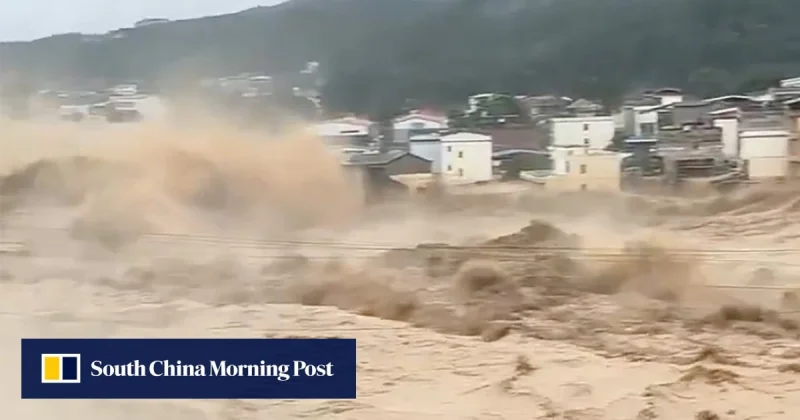
Typhoon Maysak slammed Guangxi over the weekend, leaving floodwater high enough to submerge homes in Renhe village by dawn on Monday and sending residents in Nanning to rooftops for help. In Hubei, the storm also triggered thunderstorms and tornadoes, adding a rare, violent twist to a system that had already forced tens of thousands from their homes.
In Renhe, Zhou said the water rose so fast on Sunday that families had little time to gather food before fleeing. By the early hours of Monday, she said, the water had reached knee height, and by dawn the first floor of homes was underwater. Her four-month-old niece had gone for more than a day without milk, a small detail that captured how quickly the storm had turned daily life upside down.

The scale of the damage was already stark. State media said at least 17 people died in Hubei and hundreds were injured after the thunderstorms and tornadoes there, while at least four people died in Guangxi after rivers swelled and dam walls broke. Officials estimated 60,000 people had been evacuated and said at least 90,000 were affected in total, but residents from Guangxi said thousands were still trapped on rooftops, including in mountain villages, where rescue workers had not yet reached everyone.
Authorities in Nanning warned that extremely heavy rain could still hamper rescue efforts, even after President Xi Jinping ordered all-out rescue and relief operations. That makes the next stretch of the response especially difficult: more water can still cut off villages already waiting for help, and another storm, Super Typhoon Bavi, was churning across the Pacific and forecast to hit China's eastern coast later in the week.
Typhoons that bring widespread flooding are common in China at this time of year, but Maysak stood out for its sudden onset and the short, intense winds that state media said defined the storm. It was the first typhoon to make landfall in China for the 2026 season, a reminder that the country's weather season has opened with a fast-moving storm that has already spread from Guangxi to Hubei and left rescue teams racing the rain.
