


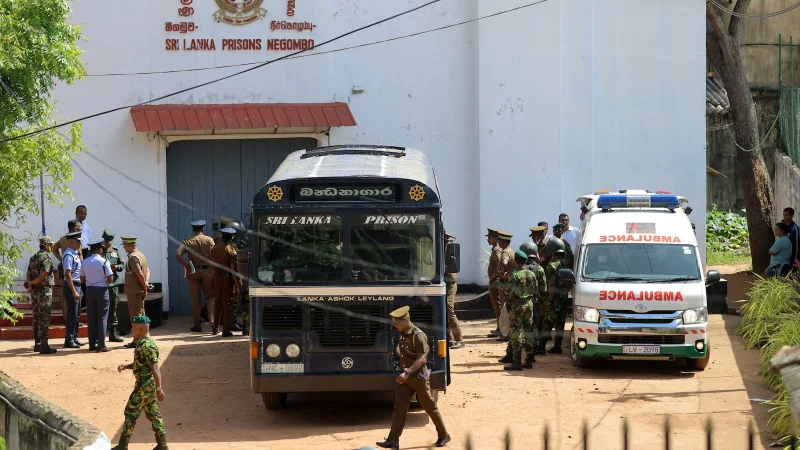
The death toll from a prison clash in Negombo, Sri Lanka, rose to 26 on Tuesday, and 77 people were still being treated in hospitals after the violence that spread through the facility over two days. Seven prison officials and 19 inmates died, authorities said, as they moved to contain an unrest that turned lethal after guards intervened.
Harshana Nanayakkara told parliament the clash was believed to be linked to narcotic drugs and gang rivalries, and said it began between two rival gangs tied to the illegal drug trade. By his account, the first attack was carried out on inmates who were acting as informants, before guards came under fire and, in some cases, beatings. He said prison guards fired their weapons to restore control and protect themselves, and that some firearms ended up in inmates’ hands, allowing them to shoot at guards. He also said a small group of organized inmates destroyed CCTV cameras and a body scanner during the melee.

That explanation matters because the prison system was already under extreme strain. Sri Lankan prisons hold more than 39,000 inmates in a system built for 10,000, and Senaka Perera said the Negombo prison itself had 2,600 prisoners in a facility with room for 650. The hospital count showed the scale of the aftermath: 23 prison officials and 54 inmates were still under treatment. Families gathered outside the prison and a hospital on Tuesday, while security around the site was tightened with additional army troops and armed tanks.
But the cause of the violence is still not settled. Officials have pointed to drugs and gang rivalry, while prison welfare groups say overcrowding and poor conditions also helped drive the unrest. Nanayakkara said a committee led by a retired judge will be set up, alongside a police investigation and an internal prison department inquiry, and he said the government will examine how the weapons were obtained and whether congestion or security lapses made the clash possible.
What remains unknown is the part that most clearly turns a riot into a disaster: how the firearms reached the inmates at all. Until that is answered, the death toll tells only part of the story. The other part is a prison system so crowded that one outbreak of violence could overwhelm guards, hospitals and the state’s account of what happened inside.
