


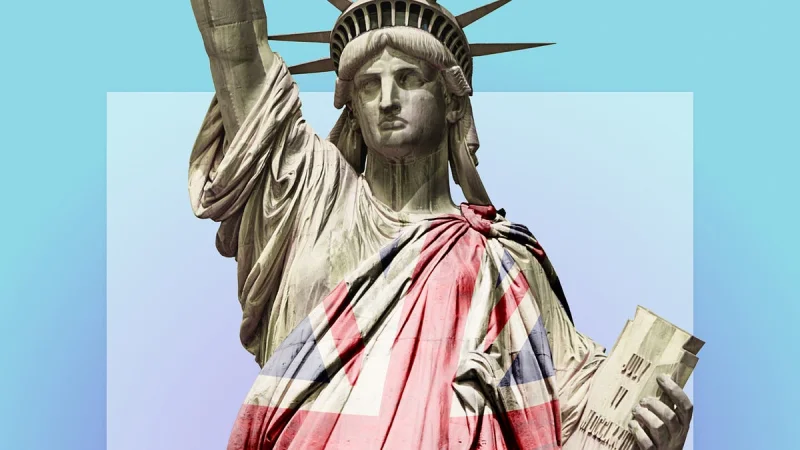
On the quarter-millennium of the Fourth of July, the American Revolutionary War invites a harder question than a celebration does: what if the United States had never broken from Britain? The answer in this counterfactual is not that freedom would have vanished, but that it would have come by a different road, with less ruin along the way and, somehow, with the same eventual independence intact.
That question lands now because July 4 has become a yearly reckoning with a decision that was not automatic in 1776. Most members of Congress did not have independence on their radar at the start of that year. The purpose of Congress and the Continental Army was to push the British Empire to repeal the Intolerable Acts, not to rip up the imperial bond at once. A decade before 1776, street protests and economic boycotts had helped force the nullification of the Stamp Act, and by early 1775 that pressure had already failed to move Parliament. The next step, in the minds of many, was not a declaration but escalation, even to the point that killing a few redcoats seemed like the clearest way to get London’s full attention.
The problem was that the old pressure campaign was running out of road. The bloodshed at Lexington and Bunker Hill had already happened the previous year, and by the spring of 1776 Congress remained deadlocked over fresh peace talks versus a total break with the British Empire. That deadlock matters because it shows how contingent independence really was: the United States was not waiting on a patriotic mood alone, but on a chain of choices that could still have gone the other way. In that sense, the counterfactual does not imagine a weaker country; it imagines one that would still be free and independent, only through a path that never required the final severing of ties.

Thomas Jefferson’s always-frail wife again fell ill on May 6, and that detail matters because the calendar of independence was not made of abstractions. It was built around interruptions, delays and private emergencies that could have altered what Congress did next. The same goes for the signature most people associate with July 4. On August 2, John Hancock set his quill to the parchment, a reminder that even the founding moved in stages, not in a single instant of certainty.
That slower, messier path is where the tension of the counterfactual sits. If the United States had never broken away from Britain, the gains often attributed to independence would still be imagined here, but the losses would be reduced: no devastation of whole cities, no family divisions wrenched open by war and no toll of more than 50,000 lives. The world in this version is also oddly specific about its habits. It has more equitable health care, the metric system, a shared ability to sing the original lyrics to My Country, ’Tis of Thee and a far deeper appreciation for cricket. The point is not that history becomes tidy. It is that the price of becoming a nation was enormous, and the alternate path suggests the country might have arrived at the same destination without paying quite so much for the journey.
What remains unresolved is not whether independence mattered, but how close it came to being delayed or diverted entirely. Once Jefferson’s household was interrupted on May 6 and Congress still could not agree on peace or rupture, the next move belonged to the men inside that deadlock. Hancock’s signature on August 2 settled the question on paper. The harder question, even now, is how many different summers could have ended without it.
