


Iran warned Donald Trump and Israel not to launch strikes as the country prepares for the state funeral of Supreme Leader Ayatollah Ali Khamenei, raising the risk of a new confrontation just as the funeral window opens. Ali Abdollahi said the enemies of Iran should avoid a miscalculation or face harsh retaliation.
The timing matters because the funeral processions for Khamenei begin on July 4 in Tehran and run through July 9, when he will be buried in Mashhad. Ceremonies are also planned in Qom and Iraq in the same period, giving the warning a fixed national frame rather than a vague diplomatic one.
For readers searching Abbas Araqchi now, the reason is not only the threat itself but the parallel diplomacy unfolding at the same moment. Trump said the denuclearisation of Iran is moving along well and that very good meetings were held in Qatar, where his envoys Steve Witkoff and Jared Kushner arrived on Tuesday to meet mediators. Qatar's foreign ministry said the talks made positive progress on issues related to the interim agreement, even as no direct talks have taken place and discussions continue in search of a permanent ceasefire.

The contrast is stark. On one side, Tehran is telling the enemies of Iran to think twice before any miscalculation during a period of mourning and mass ceremonies. On the other, Trump is publicly describing the process as advancing and has claimed that Iran has agreed to just about everything we need, a far more confident reading than the one coming from the Iranian side.
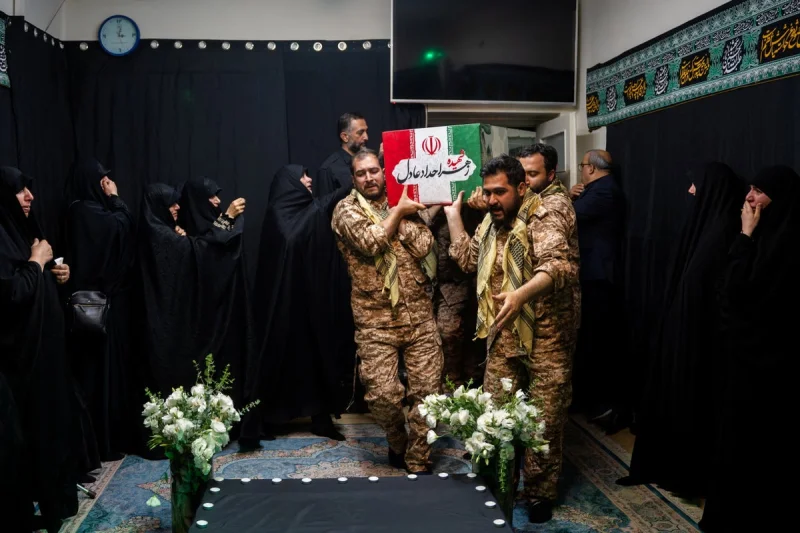
Zahra Haddad Adel is part of the human weight of the moment: IRGC soldiers were pictured carrying her coffin ahead of her funeral ceremony. That image sits inside a wider sequence that now stretches from Tehran to Qom, Iraq and Mashhad, with funeral processions set to become both a public farewell and a political warning.
Bob Blackman added another layer on Thursday, writing that Reza Pahlavi should not be given a platform to justify replacing one form of authoritarian rule with another and saying a return to the monarchy in Iran is not welcome. The source of the argument is clear enough: those trying to cast Pahlavi as an alternative to Supreme Leader Ayatollah Ali Khamenei have not, so far, turned that idea into a real political force. What happens next is whether the funeral period passes without a strike and whether the talks in Qatar can move from positive progress to anything concrete before the window closes on July 9.
