


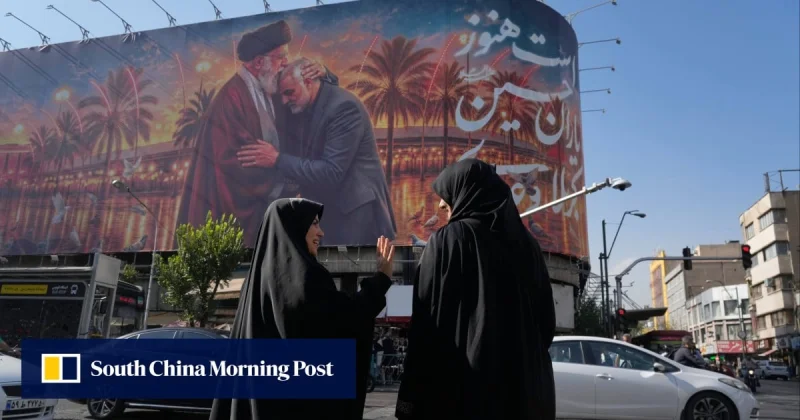
Qatar said Wednesday that U.S. and Iranian negotiators made positive progress in Doha, and that new meetings would follow the funeral for Supreme Leader Ali Khamenei. The talks were the second day of indirect nuclear de-escalation discussions, with Iran again refusing to sit face to face with U.S. officials and relying on Qatari mediators instead.
That matters because the market heard the message before the diplomats did. Brent crude futures fell 1.38 dollars, or 1.89 percent, to settle at 71.57 dollars a barrel, while U.S. West Texas Intermediate crude futures dropped 92 cents, or 1.32 percent, to settle at 68.58 dollars a barrel. Both benchmarks hit their lowest levels in more than four months as traders reacted to the idea that the talks were moving forward.
Dr. Majed Al Ansari, the Qatari official delivering the update, described the contacts as "positive progress" and said the next round would come after the funeral for Supreme Leader Ali Khamenei. He did not spell out what, exactly, was settled in Doha. That gap is now the center of the story: the process is moving, but the substance remains mostly behind closed doors.

One side of that gap is already public. Mohammad Bagher Ghalibaf said Tehran will not move forward with a final agreement with the United States until the commitments in the previously agreed memorandum of understanding begin to be implemented. Abbas Araghchi added that the terms of the Islamabad MoU are crystal clear and public for all to see, while also warning that any threat against Iran's people and leadership would bring an immediate powerful response. Those remarks show why the diplomats can talk about progress without yet claiming a deal.
The pressure is not only coming from Tehran. President Donald Trump has reportedly held multiple conversations about returning to all-out war in Iran if the talks fail, even as The reported that he is trying to keep the diplomatic route open for now. Steve Witkoff and Jared Kushner were leading the U.S. delegation in Doha, and a senior U.S. official told News that the technical talks through Qatari mediators were making progress.
The wider setting is also part of the read. The United States and Iran have agreed to a weeklong de-escalation in the Strait of Hormuz ahead of the Fourth of July, according to reports, while Oman's foreign minister said Wednesday that Oman will keep working with the United Kingdom on de-escalation and preventive diplomacy. Iran's U.N. ambassador Amir Saeid Iravani also sent a letter to António Guterres objecting to remarks by Israel Katz, after Katz said that Mojtaba Khamenei was marked for death and, according to Ynet, that Khamenei was a dead man.
The Doha talks are not over, but they are no longer static. If the next meeting happens after the funeral as promised, the real test will be whether the positive progress in Qatar turns into implementation, or stalls again at the first demand for proof.
