


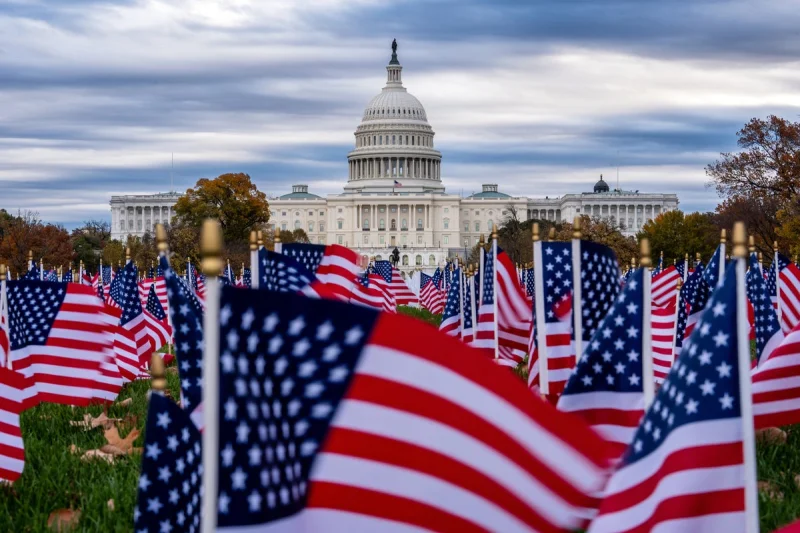
Jerry Esters flies three American flags at his Sherwood Forest home in Detroit, and he says he does it for the same reason many others do not: history. The 64-year-old retired clay sculptor for a Detroit automaker said the flag represents a fight to belong, not just a symbol to display.
A new -NORC poll found that Americans’ views of the flag are split sharply by politics, age and race. The survey of 2,596 adults, conducted April 16-20, found that about half of U.S. adults say they display the flag at home throughout most of the year or during holidays, but the habits break hard along partisan and generational lines.
About 7 in 10 Republicans said they fly the flag at least during holidays, while about 6 in 10 Americans ages 60 and older said the same. By contrast, about 6 in 10 Democrats and independents said they never fly the U.S. flag, and that share rose to 75% among Democrats under 45. Race showed a similarly sharp divide: only about 3 in 10 Black adults said they ever display the American flag, compared with about half of white adults and about half of Hispanic adults.

For Esters, the display is personal. He said, “When these homes were built, Black men like me, my mother and my family... we couldn’t even buy these homes,” adding, “To me, that’s one reason I fly the flag.” He also said, “We went through a lot to be able to own nice homes, and this is what we fought for,” and, “I think that’s the American way, but we got to fight for it and we, as Blacks, fought for it.”
That view lands differently for others. Yvonne Pistochini, 79, said there is no scenario under which she would allow the Stars and Stripes to cast its shadow where she lives, and said the America identified by the flag is not the same country she saw growing up. The split helps explain why a symbol often treated as common ground now reads as a fault line to many people who are being asked, as the nation moves toward its 250th birthday celebration, what patriotism looks like at home.
Matthew Delmont said many Black Americans see the flag as both a symbol of inclusion and exclusion. He added that Black Americans, more so than white Americans, also understand how the flag can be used to justify a version of patriotism rooted in exclusion, with the flag being used to say “you don’t belong here.” That contrast is what the poll captures: not whether people know the flag, but whether they trust it to speak for them.
