


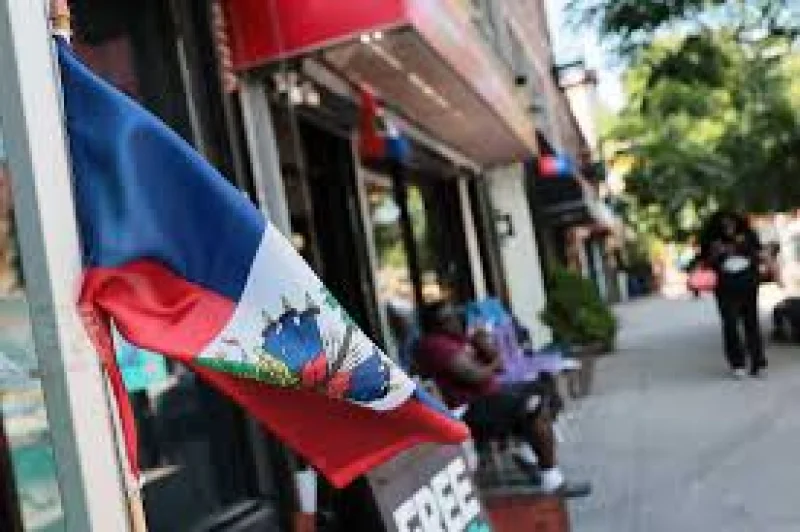
The Supreme Court has stripped humanitarian protections from hundreds of thousands of immigrants, and Markwayne Mullin said Haitians and others on temporary protected status should either file for permanent residence or leave the United States.
Mullin made the remarks on ’s State of the Union, saying people should “either try to fill out the paperwork and be here underneath a permanent status, or we’ll help you get back to your country.” He said the administration would provide a plane ticket and roughly $2,100 to help people re-establish themselves after returning, adding that temporary protected status is not meant to be permanent.
The ruling is set to affect an estimated 350,000 Haitian immigrants and 6,000 Syrians, a sweeping change for a program created to give temporary legal residency to people fleeing war, disaster or other turmoil. The United States first granted TPS to Haitians after the earthquake in 2010 and to Syrians after the civil war in 2012, and the status had been renewed repeatedly since then.

For Haitians, the stakes are immediate. The State Department warns against travel to Haiti because of violence, crime, terrorism and kidnapping, and the Supreme Court’s decision could open the door for deportations to countries facing conflict and destitution. Haitian TPS holders and advocates have already condemned the ruling, saying it threatens to upend lives built over years of legal residence.
Franky Pierre, who came to the US with his family during the 1991 military coup to overthrow Jean-Bertrand Aristide, said the change would hit Springfield hard. “For Springfield, it’s going to hurt. When I came here, this area was dead. In this plaza, there are [now] seven Haitian businesses,” he said. “All of these people are going to have to run away or go somewhere, which I’m pretty sure is going to start tonight.”
His warning lands against a long trail of political and social hostility in Springfield. During the 2024 election, Donald Trump falsely accused Haitians there of eating other people’s pets, and the repeated insults helped fuel bomb threats and white supremacist marches. Now the legal pressure is arriving on top of that fear, with people who had been allowed to stay under TPS left to decide whether they can qualify for permanent status before the window closes.
That is where the real uncertainty sits: no one has said how many Haitian TPS holders will manage to secure permanent residence in time, or how the promised ticket and cash would be handed out. Mike DeWine called the ruling a “mistake” and said Haiti could hardly be worse, while Markwayne Mullin and other Republicans say TPS was always temporary. For families and businesses already bracing for the end of protection, the next move will not come from Washington in the abstract. It will come from whether they can stay, and whether they can do it before the system pushes them out.
