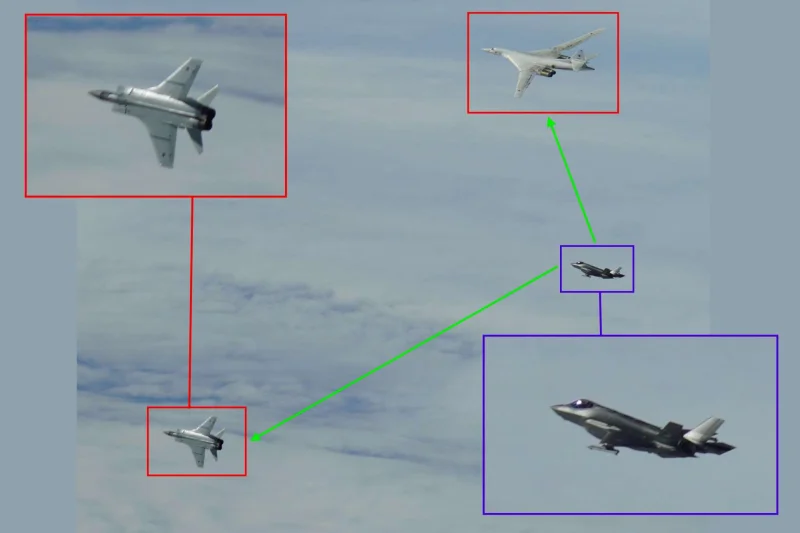
Norwegian F-35 fighters intercepted Russian Tu-160 strategic bombers escorted by MiG-31 aircraft over the Barents and Norwegian Seas on June 23, 2026, in a visible reminder that NATO’s northern flank remains under close watch.
NATO Air Command confirmed the interception the same day, saying it came amid a broader surge in Allied Air Policing missions across the Alliance’s northern and eastern flanks. The defining image was simple and sharp: a Royal Norwegian Air Force F-35 flying between a Tu-160 and its MiG-31 escort.
For readers searching the NATO response now, the reason is the aircraft mix. The Tu-160 is a strategic bomber, and the MiG-31 is built to shepherd it at speed through the High North. A single Norwegian F-35 was placed directly between them, turning a routine scramble into a public signal that Allied fighters are meeting Russian long-range aviation with fifth-generation aircraft.

The encounter mattered even though the Russian formation stayed in international airspace. That is the friction point in this kind of mission: no border was crossed, yet the flight was still tracked, identified and shown to the public as a military event worth noticing. Portuguese F-16s, Norwegian F-35s and French Rafales were all scrambled on separate missions around the same period, underscoring how often Allied aircraft are being launched to identify Russian military aircraft close to Allied airspace.
That pattern points to a wider shift in Arctic air policing toward networked deterrence. The F-35 is not just a fighter in that role; in a QRA launch it becomes an airborne sensor and information node, feeding the recognized air picture and supporting Combined Air Operations Centre tasking. In practical terms, that means the aircraft is helping NATO see, sort and respond faster across a crowded northern sky.
What remains unanswered is why the Russian Tu-160 sortie was flown that day and how long NATO tracked it. What is clear is that the mission did not end with a silent transit over cold water. It ended with a Norwegian F-35 in the middle of the formation, and with NATO making sure the region saw that it had noticed.