


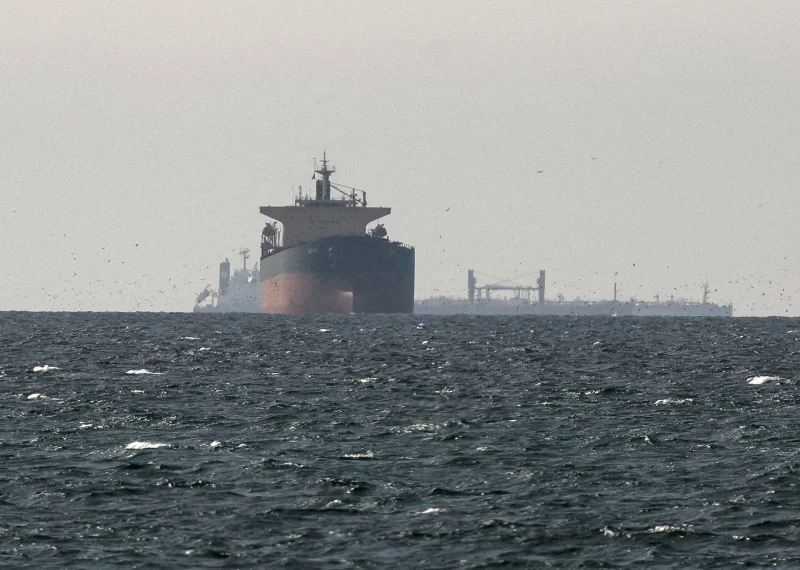
The U.N. maritime agency paused the evacuation of ships through the Strait of Hormuz on Thursday after an attack on a vessel, interrupting a fragile effort to keep traffic moving through one of the world’s most sensitive shipping lanes. The pause came just days after the United States and Iran reached an initial agreement early Monday to open the strait and try to extend a shaky ceasefire in the Iran war.
The move matters because tankers and cargo vessels had only recently begun using a new route promoted by the U.N. maritime agency, with several ships making their way out along the coast of Oman. Iran had already threatened vessels using that path, and the latest attack turned a narrow safety plan into a stop-and-wait decision.

The strait has been at the center of a tense effort to restart shipping after the fighting. Cargo ships and commercial vessels were seen moving through the Strait of Hormuz off Bandar Abbas, Iran, on Wednesday, June 17, 2026, and tankers and cargo vessels were also seen in the Gulf of Oman on Tuesday, June 16, 2026, along routes linking the strait and the Arabian Sea. The new opening was supposed to give shippers a way through while the ceasefire held, however shakily.
That is what makes Thursday’s pause so disruptive. It does not erase the agreement reached early Monday, but it shows how quickly one attack can override a diplomatic arrangement before it has time to settle into practice. The specific vessel attacked was not identified, and there was no word on who carried out the strike, leaving ship operators with a route that exists on paper but is again unsafe in practice.
Marco Rubio, meanwhile, was in Bahrain this week, where he said the United States and Gulf allies would ensure there would be no fees charged on ships moving through the strait of Hormuz. On Wednesday, June 24, 2026, Abdullatif bin Rashid Al Zayani spoke with Rubio at Bahrain International Airport during his visit to the Middle East, and on Thursday, June 25, 2026, Rubio met with Hamad bin Isa Al Khalifa at Al-Sakhir Palace near Zallaq. The message from diplomacy is clear enough: reopen the lane, keep it moving, and make it affordable. The pause after the attack shows how far the region still is from that outcome.
