


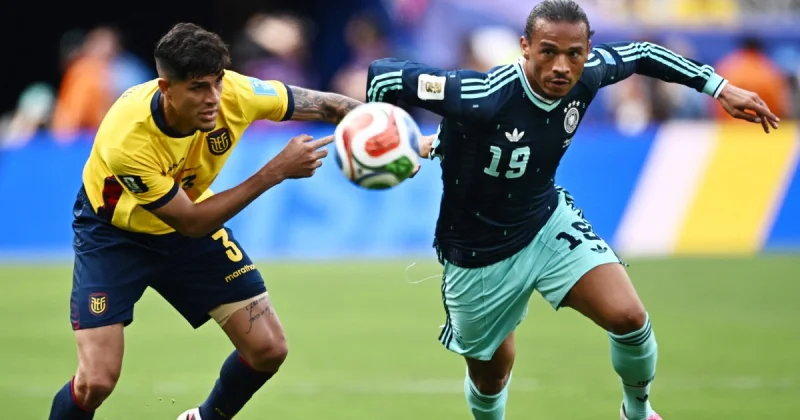
Ecuador beat Germany 2-1 on June 25, 2026, and moved into the round of 16 after a result that left it in third place but still in line to advance. Gonzalo Plata delivered the decisive second goal in the 77th minute, a puntazo off a corner that put Ecuador over the top.
The win mattered because the group table was tight enough that Ecuador’s place in the knockout stage depended on the standings and goal difference holding up, not just on one scoreline. If that remains unchanged, Ecuador would meet El Tri in the round of 16, turning one narrow victory into a much bigger tournament path.

The result also explains why June 25 drew so much attention in the 2026 World Calendar. Ecuador was one of several teams in action that day, alongside Costa de Marfil against Curazao, Países Bajos against Túnez, Japón against Sweden, Paraguay against Australia and the United States against Turkey. The day produced not just results, but the kind of table movement that can reshape a group in a single afternoon.
There was another reason the date stood out. Katia Itzel García was assigned to the match between Países Bajos and Túnez, becoming the first Mexican woman to oversee a men's World Cup match on the field and only the third woman in history to do so. Sandra Ramirez and José Enrique Naranjo worked with her on that game, while Tori Penso handled Ecuador against Germany with Brooke Mayo and Kathryn Nesbitt as assistant referees. Stephanie Frappart had been the first central referee in a men's World Cup in Catar in 2022, a milestone that now has company.
That leaves Ecuador in a strong but not fully sealed position. The victory put it in third place, and the knockout berth still rests on the goal-difference math that can decide everything when teams finish level or near level. If the tiebreaker holds, the next stop is El Tri; if it does not, the celebration from Plata’s goal will have to wait for the table to finish its work.
