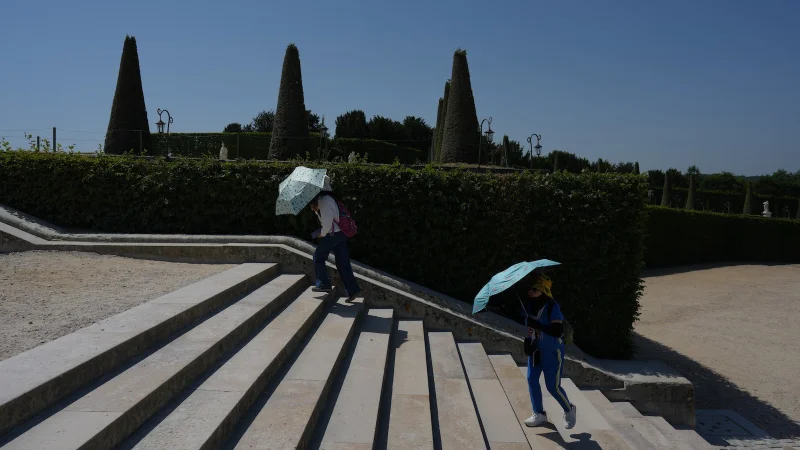
France has been forced into emergency heat measures after a blistering June wave pushed temperatures above 40°C in several places and set more than 180 June records across the country. The government also expanded danger-to-life red alerts to 35 of 96 mainland French regions and imposed nationwide bans on public drinking of alcohol.
The warning matters now because the heat is not easing. Temperatures in Paris could hit 40°C for two or three days in a row, and France was forecast to sit at the center of the planet’s most significant heat anomaly over the next few days. A sprawling upper-level high was expected to park over France for much of the week, with the heatwave set to intensify from Monday across much of Europe.
For France, the scale is what makes this week stand out. Several locations have already set all-time records above 40°C, turning what would normally be a punishing summer spell into a record-breaking June event. The hot weather is unusually early, because Europe’s worst heat typically arrives in July and August, but the pattern is moving faster and hitting harder than many people would expect at the end of June.

That early timing is part of the friction. Extreme heat is becoming more common as the climate changes, and the current surge is being described as at least 5x more likely because of human-caused warming. France is also more exposed because widespread air conditioning is limited, which leaves many people with few options when temperatures keep climbing and nights do not cool enough to recover.
Sunday brought another sign of how dangerous the heat has become: several drownings were reported in France as people tried to cool off, and 13 people died by drowning over the weekend. The figures do not show how many of those deaths were directly driven by the heat, but the timing is hard to ignore. When the only relief is water, the margins get thin fast.
The next test is simple. If temperatures rise further as expected, the emergency response will have to hold while the heat lingers over France and spreads deeper across Europe. What is still not clear is how long the red alerts and public drinking bans will remain in place if the week stays locked under extreme temperatures.