


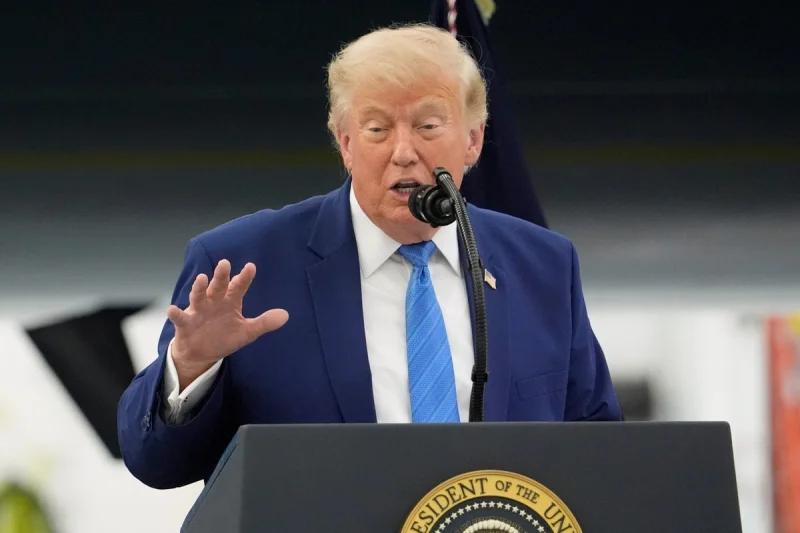
Donald Trump threatened on Monday to “take over the rest of the country” if the Strait of Hormuz is closed again, sharpening a warning that put Iran’s most sensitive waterway back at the center of the confrontation with the US. He said he had already told Iranian officials that if they closed the strait, “you won’t have a country.”
The warning landed while negotiators were still talking. Mediators from Pakistan and Qatar said over the weekend that the sides had agreed on a roadmap to reach a final deal within 60 days, and negotiators said there had been great progress in talks between Iran and the United States. Markets moved on that message: Brent crude futures fell 0.7% to $80.07 a barrel on Monday, while Japan’s Nikkei, Chinese blue chips and South Korea’s Kospi all rose.
That combination made the threat harder to dismiss as routine bluster. Trump was escalating toward a direct seizure threat at the same time the diplomacy was being described as moving forward, and that is what gave his remarks immediate weight in the market and in the talks. The Strait of Hormuz matters because it is the dispute point where pressure turns quickly into economic risk, and traders reacted to the possibility that a fragile opening might still hold.

Ebrahim Azizi answered in kind. He wrote that “The Strait of Hormuz is neither your personal casino nor the backyard of modern-day pirates; these are Iranian sovereign waters, and the ultimate decision rests with the noble people of Iran and their brave armed forces.” He also warned, “You make threats; we take action,” turning the exchange into a test of resolve rather than a policy debate.
There is still a contradiction at the center of the story. Iran lifted its effective blockade of Hormuz last week after agreeing with the US to extend a ceasefire for peace negotiations, but the Revolutionary Guards declared the waterway shut again on Saturday in response to Israeli strikes in Lebanon. That sequence shows how quickly the route can be turned on and off by politics and force, even as diplomats try to lock in a deal.
JD Vance added another piece to the picture on Monday in Zurich, saying Iran had agreed to admit inspectors from the International Atomic Energy Agency as talks continue. Trump reinforced that message on Truth Social, saying Iran would agree to have major weapons inspections long into the future. For now, the road map, the inspections talk and the renewed threat all point to the same thing: the talks are moving, but the Strait of Hormuz remains one order or one strike away from becoming the main event again.
