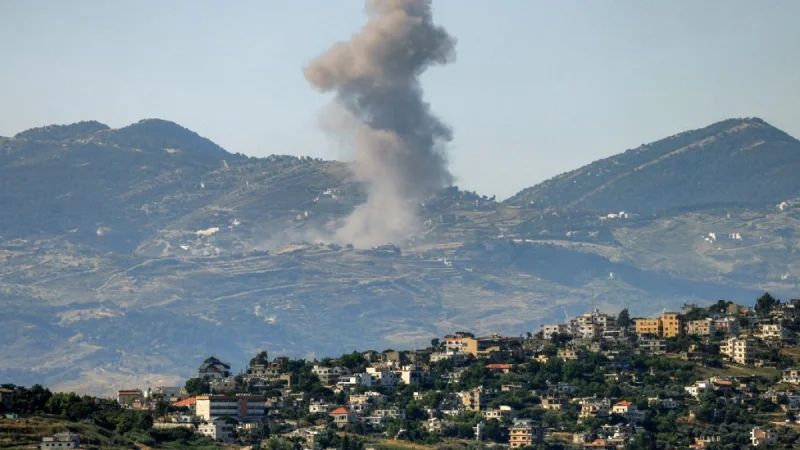
Israel and Hezbollah agreed to a ceasefire that was supposed to begin at 4pm local time on Friday, but Israeli attacks on Lebanon continued after the deadline. At least 12 Israeli air raids and artillery shelling hit southern Lebanon as the truce was meant to take hold.
The Lebanese health ministry said at least 47 people were killed and 97 others wounded in attacks on Lebanon starting at midnight on Friday. That is the number that explains why the ceasefire matters now: it was announced as a break in the fighting, yet the violence did not stop when it was due to start.
Officials and diplomats from the United States and the Gulf said the deal was brokered through Qatar, the United States and Iran, with a senior US official saying it had been reached through US and Qatari mediation, with Iran’s help. A senior Israeli official and two Hezbollah sources also confirmed the ceasefire, and a Gulf diplomat said the sides had agreed to halt hostilities.

But even as the agreement was taking shape, an Israeli military spokesperson said forces would keep operational freedom to respond to what they define as threats in southern Lebanon. That leaves the core question untouched: if one side reserves the right to strike again whenever it sees fit, what exactly stops the ceasefire from becoming a pause with no real enforcement behind it?
Heidi Pett, reporting from Tyre, said after the attacks that it did not feel much like a ceasefire. “Instead, there is a sense of deja vu. Each time a ceasefire is announced, we see a renewed burst of military activity on the ground,” Pett said. Her account matches the reality on the ground Friday, where the truce was announced, the deadline passed, and the shelling kept going.
The ceasefire was also tied to wider efforts to reduce hostilities across the Middle East. A Gulf diplomat said the aim was to keep the fighting in Lebanon from derailing a broader push to turn an interim US-Iran understanding into a lasting regional peace deal, while also easing pressure on talks over the Strait of Hormuz and global shipping. For now, though, the truce is being judged by a simpler test: whether the guns actually fall silent in southern Lebanon.