


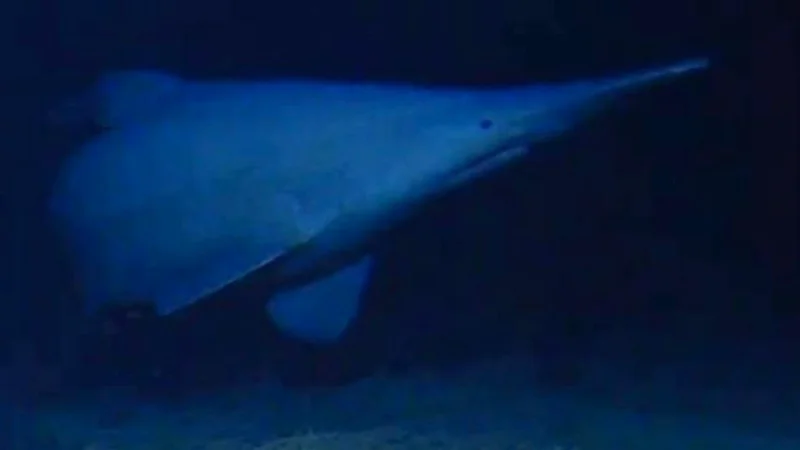
Scientists have confirmed the first peer-reviewed video of a live goblin shark in its natural habitat, turning two scattered encounters into the clearest evidence yet that the species can be filmed alive in the deep sea. The rare shark, Mitsukurina owstoni, was recorded first in 2019 near Jarvis Island and again in 2024 along the slope of the Tonga Trench.
The finding matters because goblin sharks are not just uncommon; they are among the least regularly observed sharks on the planet, and this confirmation gives researchers two documented wild sightings to work from. The animal’s strange look helps explain why it draws attention whenever it appears: a hornlike rostrum, jaws that can slingshot forward, and a pale body that can seem almost ghostly in the dark.
Aaron Judah, who helped describe the footage, said the new work is the first peer-reviewed confirmation of a live goblin shark in its natural habitat. He said he was shocked because the species is not known from the Central Pacific, which made the record look, at first glance, like a major range extension for the animal. That is part of what gives the study its weight: it is not simply a rare fish sighting, but a record that could change where scientists think the species lives.
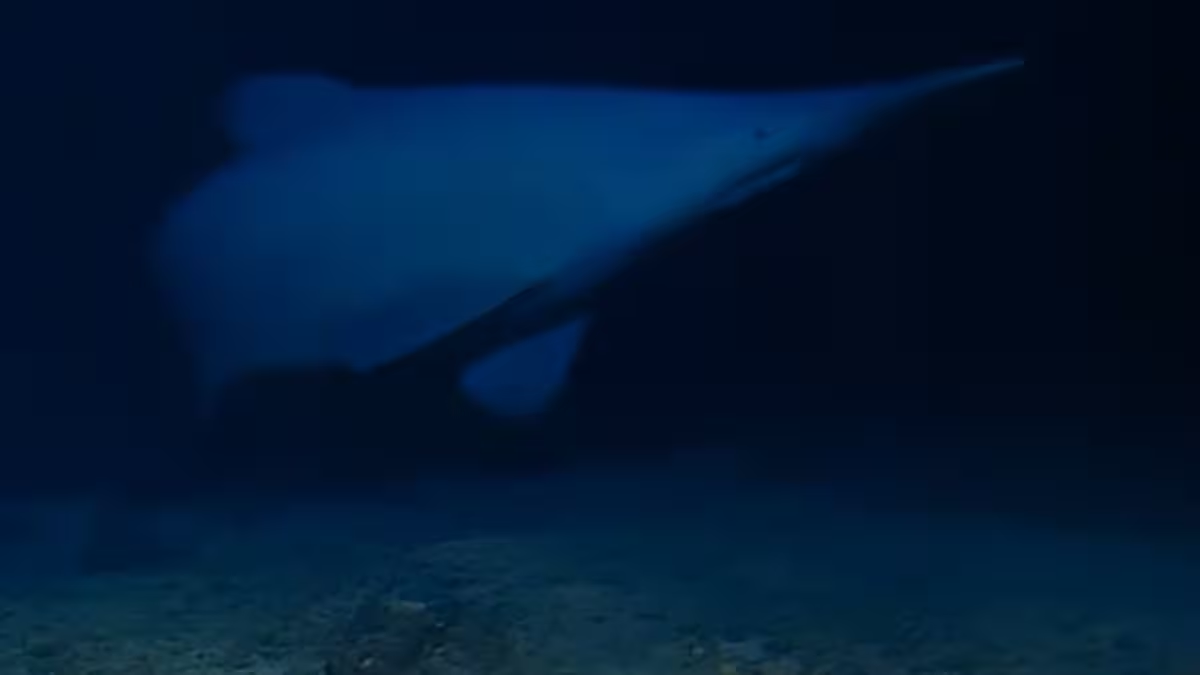
The 2019 encounter was especially easy to miss. Steve Auscavitch said the crew saw the shark only briefly before the ROV’s lights and motor noise drove it away, and no one on board initially understood what they had just seen. The video came from an unnamed seamount near Jarvis Island, an uninhabited 1.7-square-mile coral island in the Pacific Remote Islands Marine National Monument, about three-quarters of a mile below the surface. By the time the sighting was identified, the moment had already vanished.
The second record, in 2024, came from baited camera footage along the slope of the Tonga Trench, about 1,250 miles southwest of Jarvis Island. That sighting is the first time scientists have seen the species living on trench slopes, and the footage was peer reviewed and fully confirmed. Previous videos had shown goblin sharks only after they were captured and brought closer to the surface, while one other possible wild video was never reviewed or confirmed.
There is still a gap in the story that the new footage does not close: why goblin sharks turn up around seamounts and trench slopes in the Central Pacific when the species is so rarely seen in the wild. Researchers say seamounts matter as habitats for biodiversity, but the shark itself does not explain why it was there. For now, the study published in the Journal of Fish Biology leaves scientists with something better than a guess — two confirmed wild sightings — and one bigger question about where the rest of the species is hiding.
